Emergency
After the Hurricane: How to Safely Restart Your AC in Sarasota County
Turning the AC back on right after the power returns is how many storm-weakened systems fail for good. Use this step-by-step restart checklist before you touch the thermostat.
Quick answer
To restart your AC after a hurricane, keep the breakers off until utility power has held steady for about an hour, check that the outdoor unit is upright, anchored, clear of debris and never touched by floodwater, then switch the breakers on, wait 30 minutes and set Cool. Never restart a unit that sat in water.
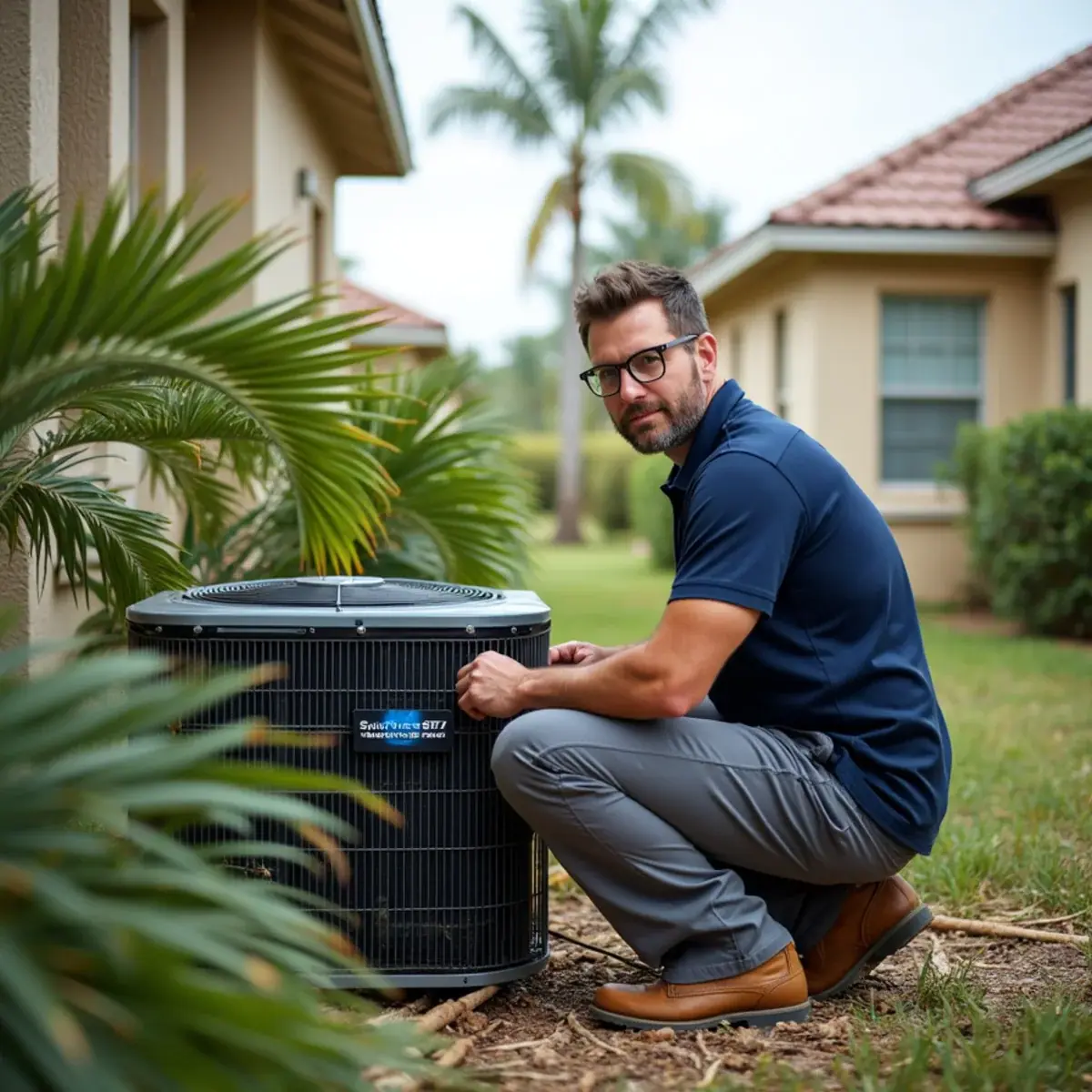
Before you restart your AC after a hurricane, wait until utility power has been steady for at least an hour, walk around the outdoor unit to confirm it is upright, undamaged and free of debris, and make sure floodwater never reached the condenser or the indoor air handler. If water touched either unit, do not turn it on. If everything looks clean and level, restore power at the breakers, give the system time to settle, then set the thermostat to Cool. The checklist below walks through each step.
Why the First Restart Is the Riskiest Moment
Hurricane damage is not always visible. Power often returns in bursts as crews re-energize lines, and each flicker surges through your compressor, contactor and control board. Wind drives sand, shingles and oak limbs into condenser fins. Storm surge and heavy rain can soak electrical components that look dry from the outside.
Across Sarasota County, the damage pattern varies by location. Barrier island and bayfront homes face saltwater surge. Inland neighborhoods along creeks and the Myakka River deal with freshwater flooding that lingers for days. That is why a careful restart matters everywhere from coastal Venice to storm-prone neighborhoods in North Port.
Step 1: Wait for Stable Power
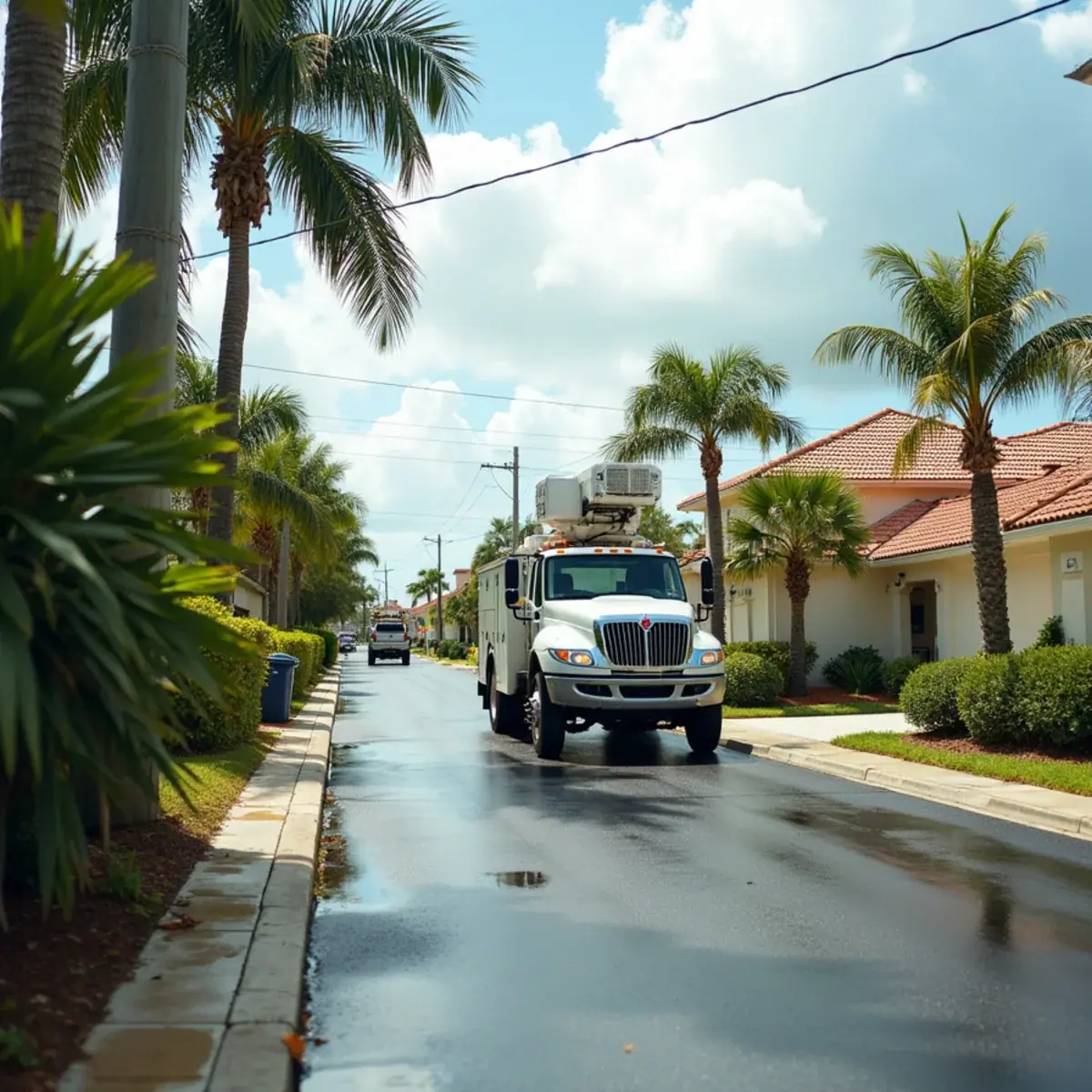
If you did not switch the AC off before the outage, turn the thermostat to Off and switch off the breakers for the condenser and air handler now. Leave them off until the lights have stayed on without flickering for at least an hour, longer if crews are still working on your street.
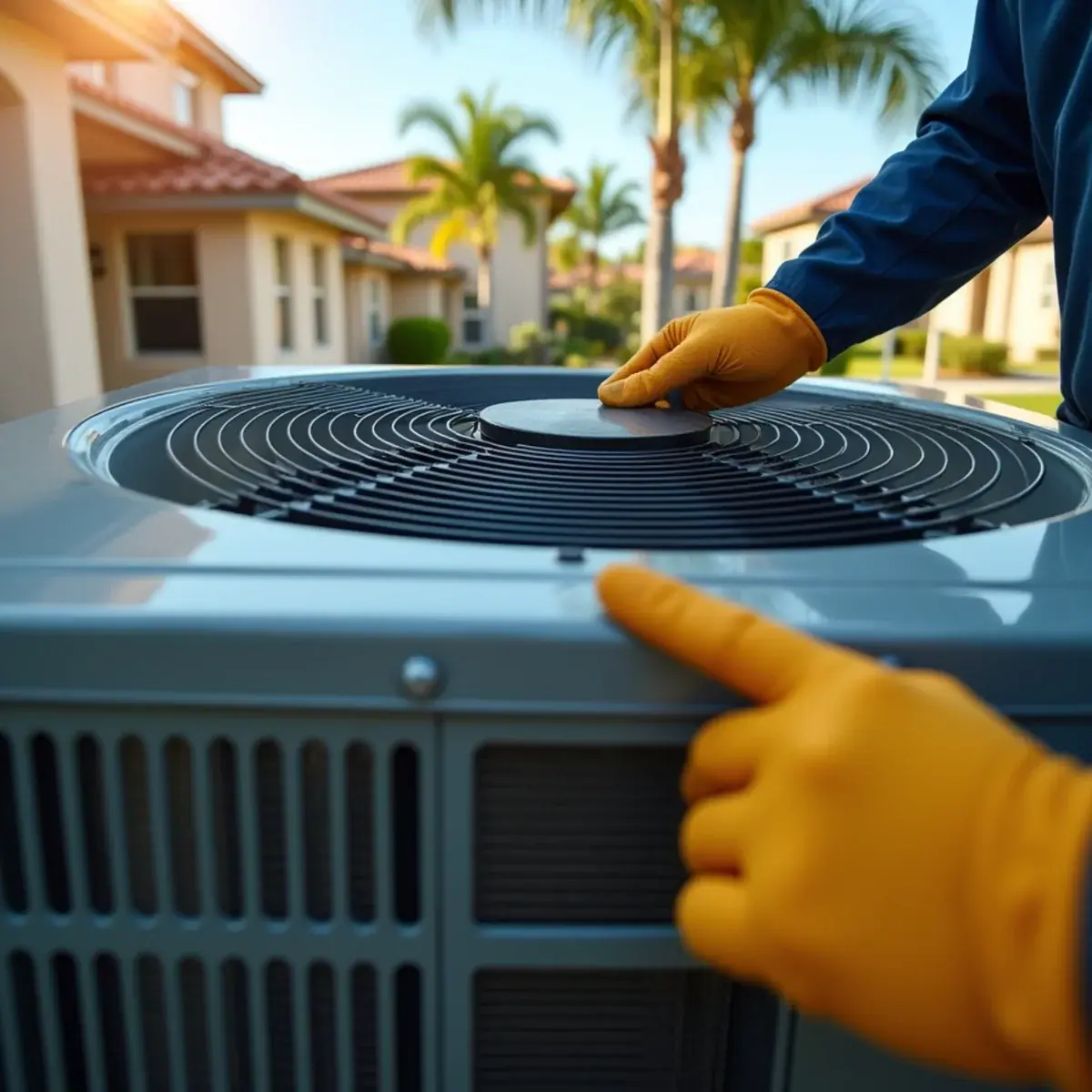
Step 2: Inspect the Outdoor Unit Without Opening It
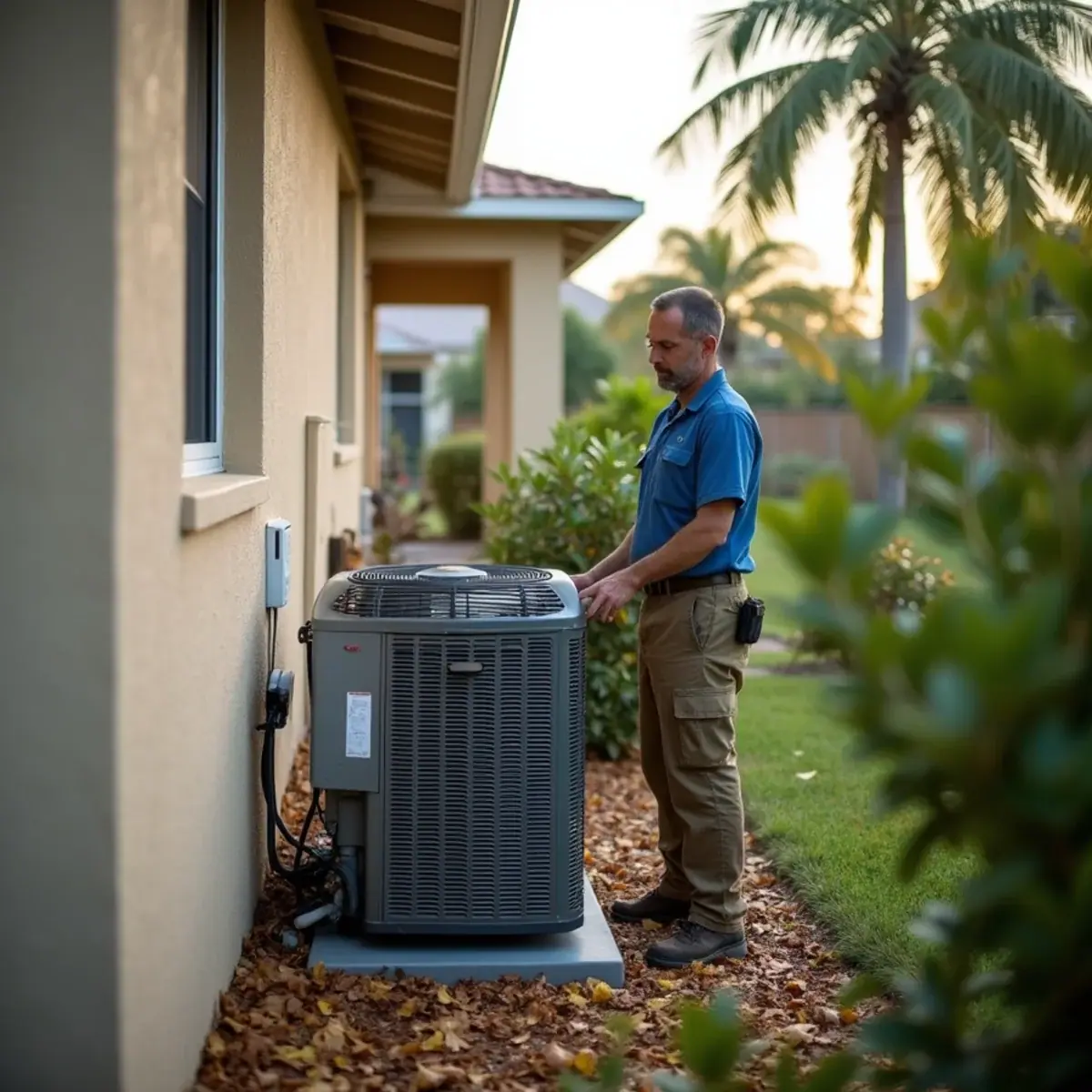
- Is the condenser still level and secured to its pad or stand? Florida code requires wind-rated tie-downs; a unit that shifted may have stressed or kinked its refrigerant lines.
- Are the copper lines and their insulation intact where they enter the wall?
- Is anything lodged in the fan grille or against the fins? Remove branches, palm fronds and loose debris by hand from the outside only.
- Is the electrical disconnect box closed, attached and undamaged?
- Do you smell oil, see an oily stain, or hear hissing? That can signal a refrigerant leak.
- Is there a waterline mark on the cabinet, pad or nearby walls?
Step 3: Take Flooding Seriously
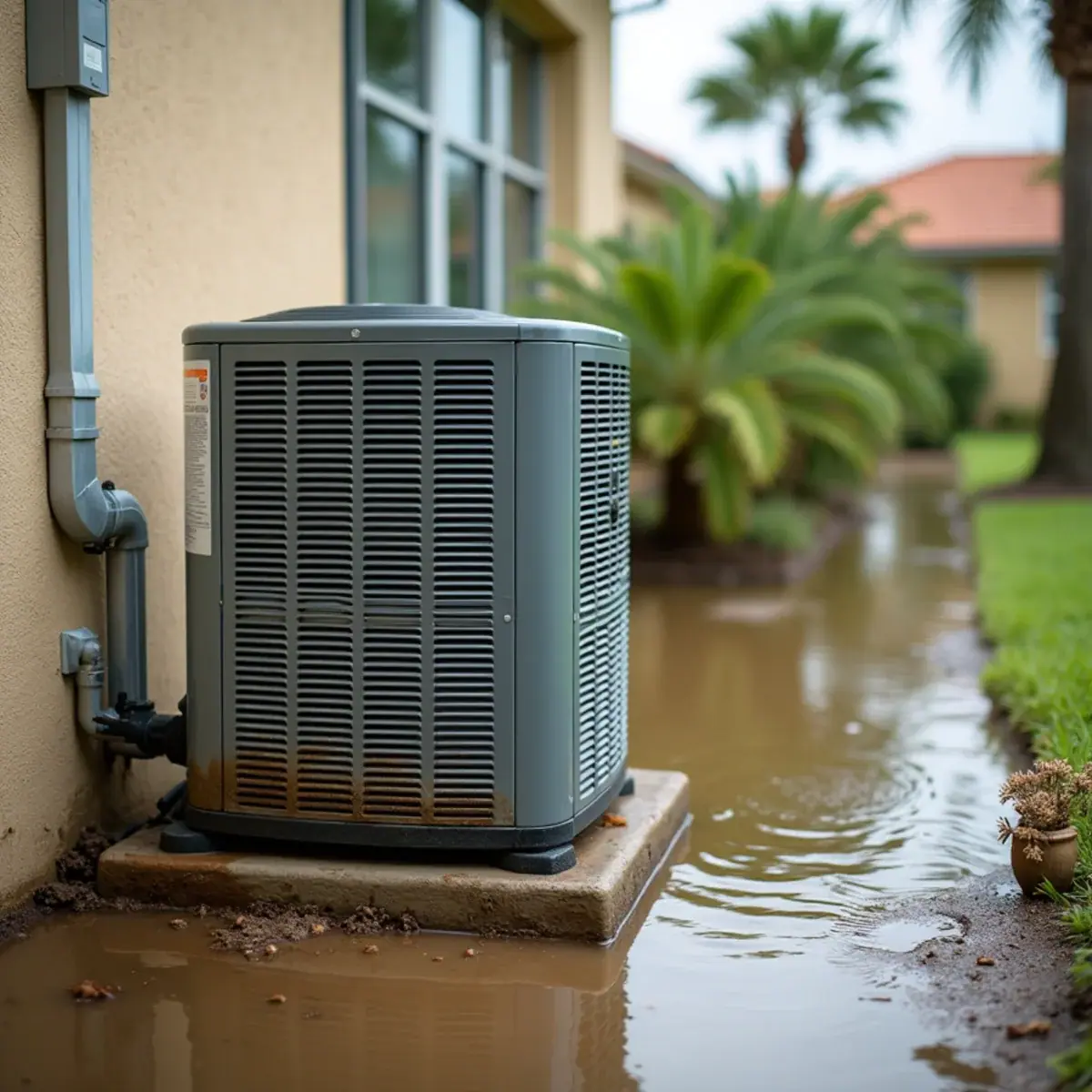
If floodwater rose high enough to reach the base of the condenser, the compressor terminals, fan motor or control wiring may be wet or contaminated with silt. Saltwater surge is worse: it begins corroding copper, aluminum and circuit boards within hours. The same applies indoors if the garage or utility closet housing the air handler took on water.
Take photos of the waterline, the unit and any visible damage before cleanup. Insurance adjusters want them, and our guide on hurricane AC damage and insurance in Florida explains why that documentation matters.
Step 4: The Restart Sequence
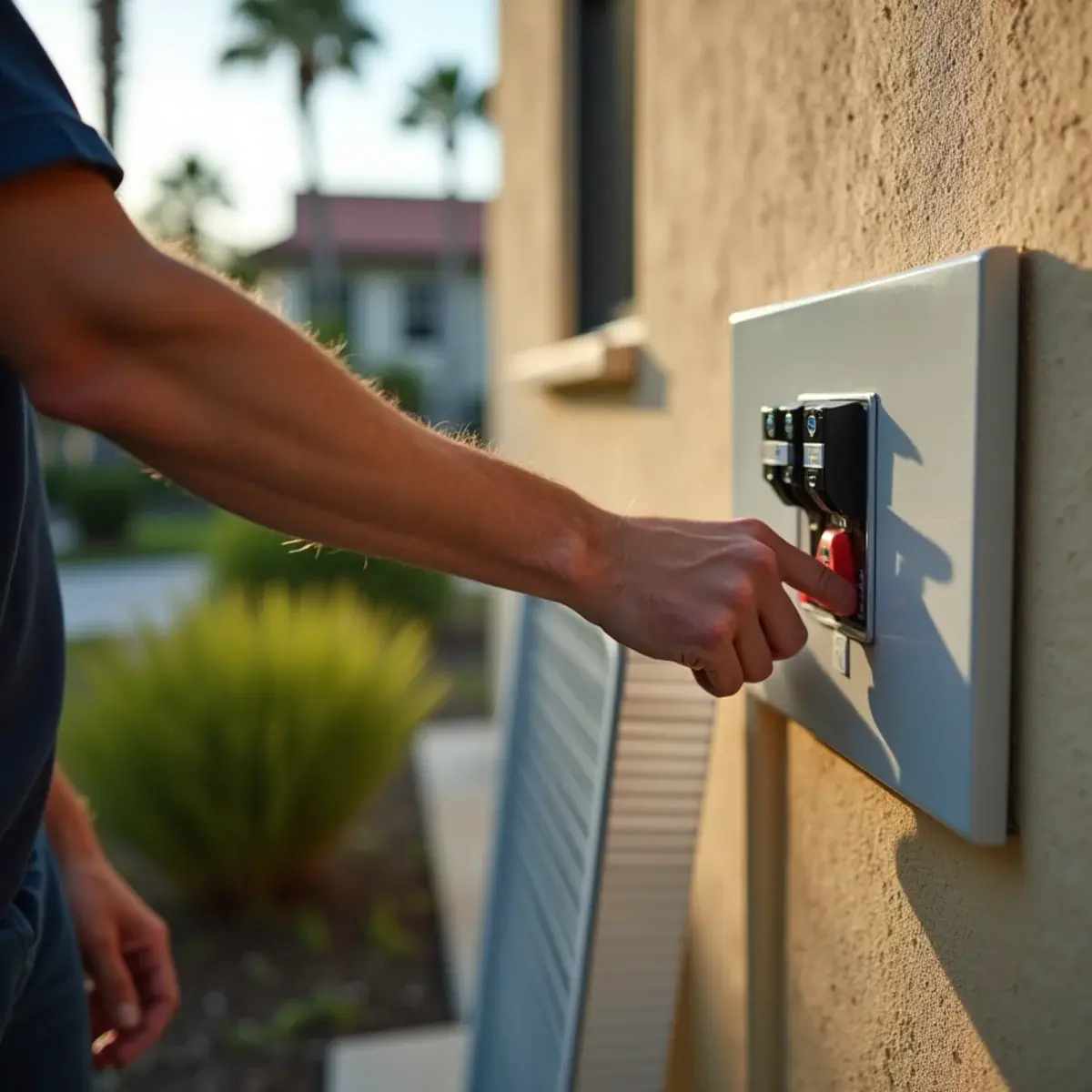
If the unit is dry, upright and clear, and power has been steady, restart in this order:
- Replace or check the air filter; storms and open doors pull in dust and debris.
- Confirm the condensate drain is not backed up and there is no water in the secondary pan.
- Switch the air handler and condenser breakers back on, with the thermostat still set to Off.
- Wait at least 30 minutes. Many compressors have crankcase heaters that warm the oil after a long outage, and control boards need time to reset their built-in delays.
- Set the thermostat to Cool, a few degrees below room temperature.
- Go outside and listen. The fan should spin up smoothly and the compressor should start with a steady hum within a few minutes.
- After 15 minutes, feel the supply air. It should be noticeably cooler than the room.
Step 5: Know When to Stop and Call
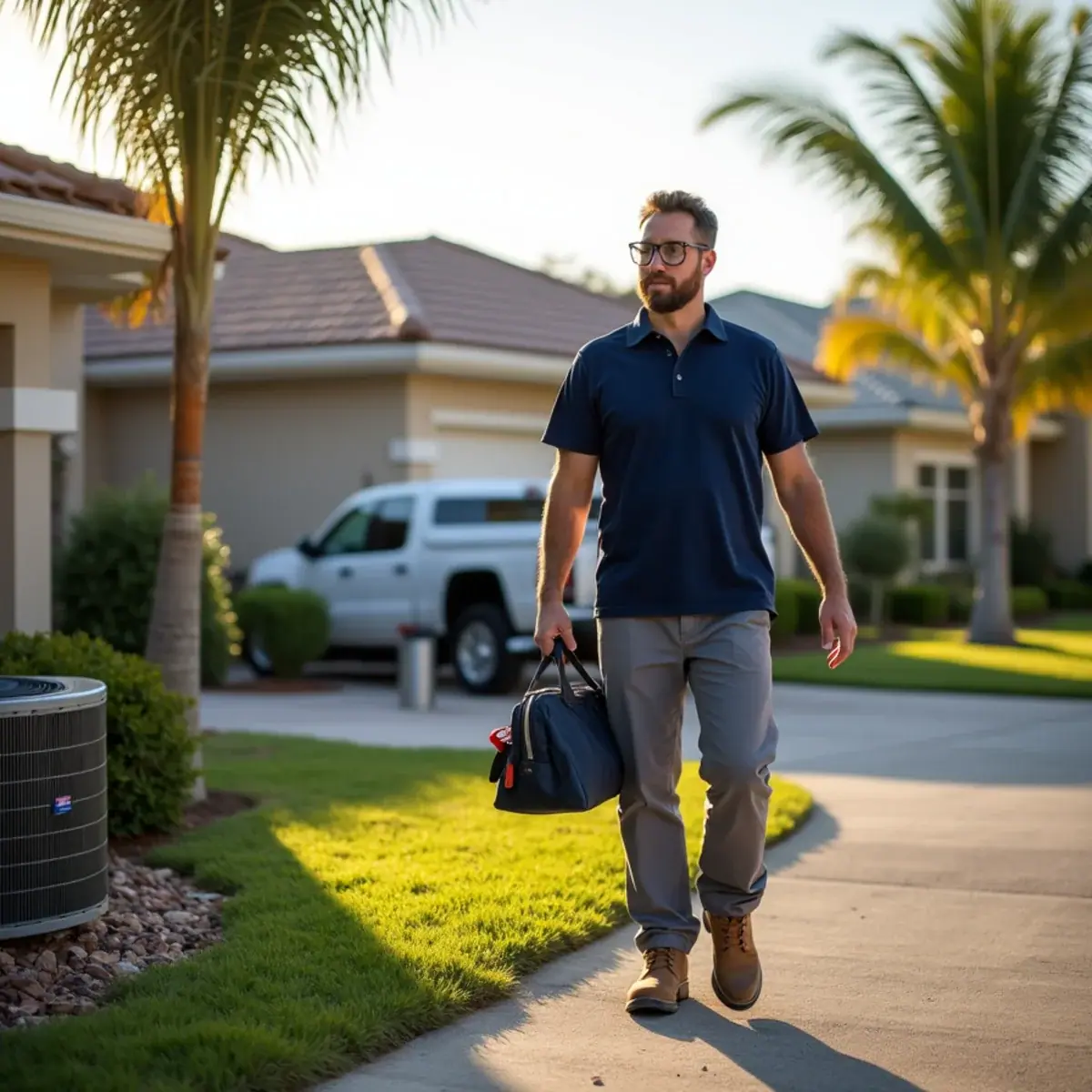
Turn the system off and call for help if you notice any of the following after restart:
- The breaker trips.
- You hear grinding, screeching, loud buzzing or rattling.
- The outdoor fan does not spin, or the unit hums without starting.
- You smell burning or electrical odors.
- The air stays warm after 15 to 20 minutes.
- The thermostat is blank even though power is on, which can point to a blown control fuse or surge damage.
Our hurricane and storm AC service covers post-storm inspections, surge-damage repair, re-securing units to their pads and documentation for claims. If the system is completely down in the heat, emergency AC repair calls are answered 24/7, though response times stretch after a major storm when every contractor in the region is busy.
After a Long Outage: Bring the Humidity Down
A Florida home closed up for days without cooling soaks up moisture fast. Drywall, carpet, mattresses and duct liner all absorb it, and EPA guidance notes that mold can begin growing on damp materials within 24 to 48 hours. Getting the AC running safely is also how you start drying the house out.
Once the system restarts cleanly, set a normal temperature rather than the lowest setting, and keep the fan on Auto so water dripping off the coil drains away instead of re-evaporating into the house. An inexpensive hygrometer tells you how it's going: aim for indoor relative humidity under 60%, ideally somewhere between 40% and 60%. If the house still smells musty or reads above 60% after a couple of days of normal running, our humidity and mold control service can track down why.
Protect the System Before the Next Storm
The homes that come through hurricanes best share a few traits: condensers on elevated stands in flood-prone lots, properly anchored tie-downs, a whole-home or HVAC surge protector, and an owner who shuts the system off before the storm arrives. Throughout Sarasota County AC service areas, it is worth reviewing those protections before the next season starts on June 1.
What Post-Storm AC Calls in Sarasota County Usually Turn Up
After a hurricane passes, our calls follow a pattern. The first wave is systems that won't start once power returns, and many of those trace to surges rather than wind: a blown low-voltage fuse on the air handler control board, a contactor coil that burned open, or a run capacitor that bulged. Once the cause is clear, those are usually single-visit repairs.
Flooded equipment takes more care. Before we energize anything that sat in water, we test the compressor windings to ground with a megohmmeter. A low insulation reading means moisture or breakdown inside the motor, and starting it anyway can finish it off. On condensers that shifted off the pad, we look for kinked line sets and cracked braze joints and leak-check before trusting the charge.
These are the mistakes we see most often after storms:
- Restarting with a tarp, cover or trash bag still strapped over the condenser, which chokes airflow and overheats the compressor within minutes.
- Hosing mud off the cabinet while the outdoor disconnect is still switched on.
- Running a flooded garage air handler because it sounds fine, with water still sitting in the electric heat strip wiring.
- Cleaning up before photographing the waterline. Hold a tape measure next to the unit so the photo shows how high the water reached; adjusters ask for exactly that.
When phones are busiest after a storm, describe your situation clearly: whether water reached either unit, whether the breaker trips, and who in the home is at risk from heat. That lets us separate the safety calls from the ones that can wait a day.
Get a Post-Storm Check
If you have any doubt after a storm, leave the AC off and call (831) 461-3437. Goran and the Brothers Services Cooling & Heating team will check it safely before it runs, or you can request a quote online for a post-storm inspection.
FAQ
Common questions
How long should I wait to turn on my AC after the power comes back?
Wait until power has been stable for at least an hour without flickering. Then switch the AC breakers on with the thermostat off, and give it another 30 minutes before calling for cooling. This avoids surge damage during restoration and lets crankcase heaters and control boards settle. After a long outage or any sign of damage, a professional check is the safer choice.
Can an AC unit that sat in floodwater be saved?
Sometimes. A unit that took on shallow freshwater for a short time can occasionally be cleaned, dried and tested, but saltwater surge usually causes corrosion that makes the compressor, motors and controls unreliable. Either way, never power it on before an inspection. Photograph the waterline first for your insurance claim.
Should I turn off my AC before a hurricane hits?
Yes. Once the storm is close and outages are likely, set the thermostat to Off and switch off the AC breakers. This protects the compressor and electronics from surges when power drops and returns. Pre-cool the house before you shut it down so it stays comfortable longer.
Does my AC need a professional check after a hurricane if it seems to run fine?
Not always, but it's worth one if the condenser shifted on its pad, took wind-driven debris, sat near standing water or ran through repeated power flickers. Surge damage and slow refrigerant leaks from stressed line sets often show up days or weeks later as a failed start or weak cooling. A check also documents the system's condition for insurance while the storm date is fresh.
Can I hose sand and mud off my condenser after a storm?
Yes, gently, with the breaker and outdoor disconnect switched off. Use a garden hose at low pressure, spray straight along the fins rather than across them, and never use a pressure washer, which flattens the aluminum. If saltwater or floodwater reached the unit, skip the rinse and have it inspected first, because cleaning the outside won't undo corrosion inside the electrical parts.
About the author
Written by the team at Brothers Services Cooling & Heating, an owner-operated HVAC contractor in Venice, FL. Goran and crew repair, replace and maintain air conditioners and heat pumps across Sarasota County every day — this article reflects what we see on real Gulf Coast service calls.