Cost & Insurance
Does Homeowners Insurance Cover AC Damage From Hurricanes in Florida?
Wind and debris damage to your AC is often covered, flood usually isn't, and wear and tear never is. Here's how the hurricane deductible changes the math and how to document the damage properly.
Quick answer
Usually, if hurricane wind or flying debris damaged it. Most Florida homeowners policies treat a central AC as part of the dwelling, so wind damage is generally covered after your hurricane deductible, typically 2% to 10% of dwelling coverage. Storm-surge or floodwater damage needs a separate flood policy, and rust, age or poor maintenance aren't covered.
Short answer: a Florida homeowners policy often covers AC damage caused directly by hurricane wind, like a condenser crushed by a flying limb, subject to your hurricane deductible. Damage from storm surge or rising water is generally flood, which usually requires a separate flood policy. Rust, age and poor maintenance are excluded almost everywhere. We're HVAC technicians, not adjusters or attorneys, so your policy wording and your insurer have the final say. What we can do is explain how these claims usually play out and what documentation helps.
Wind usually, flood usually not: a quick coverage map
| Type of damage | Where coverage usually comes from | Notes |
|---|---|---|
| Condenser struck by debris or a falling tree | Homeowners (windstorm/hurricane) | Subject to the hurricane deductible |
| Unit torn off its pad, line set ripped | Homeowners (windstorm/hurricane) | Photos of the displaced unit matter |
| Unit submerged by storm surge or rising water | Flood policy (NFIP or private) | Homeowners policies generally exclude flood |
| Rain entering through a wind-created roof opening onto the air handler | Often homeowners | Many policies require wind to create the opening first |
| Lightning strike | Often homeowners | Utility power surges may be treated differently |
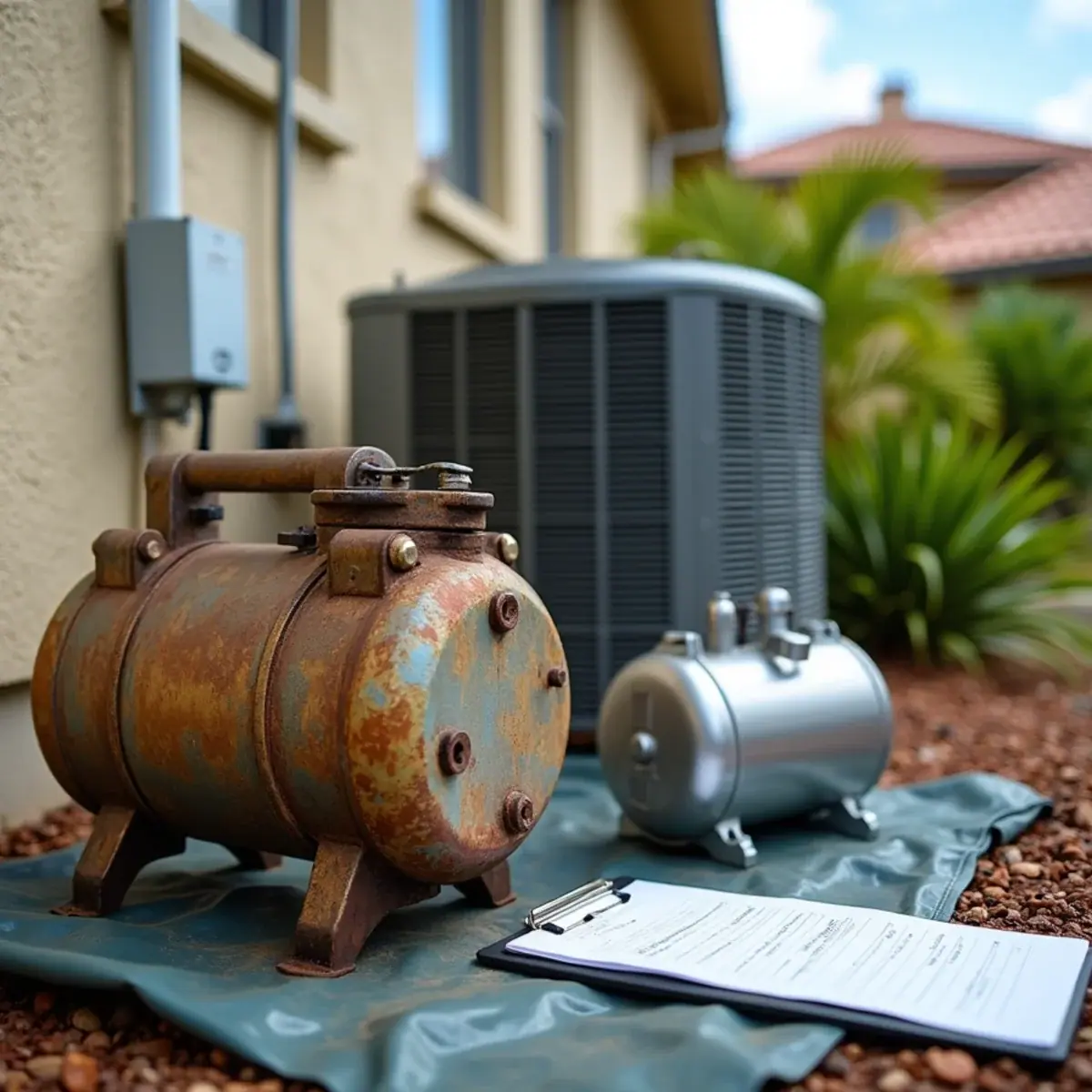
| Rusted coil, old compressor, clogged drain | Not covered | Wear-and-tear and maintenance exclusions |
How the hurricane deductible changes the math
Florida policies carry a separate hurricane deductible, commonly 2%, 5% or 10% of your dwelling coverage. On a home insured for $350,000, a 2% deductible is $7,000. Market research puts a full Venice-area system replacement between roughly $5,800 and $17,300, with a midpoint near $9,900. In other words, an AC-only loss can land below or just above your deductible.
In practice the AC is rarely the only item. Roof, screen enclosure, fence and soffit damage usually go on the same claim, and the deductible applies to the total. Florida law generally applies the hurricane deductible once per calendar year rather than per storm, which matters in seasons with two hits. Ask your agent how your policy handles it.
When the hurricane deductible applies, and when your regular one does
Not every windy storm triggers the hurricane deductible. As the Florida Department of Financial Services explains, it generally covers losses from a storm the National Weather Service has declared a hurricane, during a window that opens with a hurricane watch or warning for any part of Florida and closes 72 hours after the last one ends. A condenser flattened by an oak limb in a summer squall or a tropical storm usually falls under your regular all-other-perils deductible instead, which is often a flat amount and much smaller. That's why the date and time on your photos matter.
Flood damage and your AC
Storm surge is flood, even when it arrives with a hurricane. Under NFIP building coverage, central air conditioning equipment is generally listed as covered property, and private flood policies vary. New NFIP policies typically carry a 30-day waiting period, so buying one with a storm in the forecast is too late.
Saltwater is brutal on HVAC equipment. It corrodes control boards, contactor terminals, fan motor windings and the compressor's electrical connections. A unit that hums back to life after drying out can fail weeks later, and that delay can complicate a claim. Do not power up a unit that sat in water. Our guide on how to safely restart your AC after a hurricane covers the checks first.
What insurance generally won't pay for
- Wear and tear: an aging compressor that finally quits during the storm isn't storm damage.
- Corrosion and neglect: salt-pitted fins and rusted cabinets from years of coastal exposure. Preventive salt-air coil protection is cheaper than arguing about it later.
- Pre-existing leaks: a system that was already low on refrigerant before the storm.
- Code upgrades beyond your limits: wind-rated tie-downs or an elevated stand required by current code may fall under ordinance-or-law coverage, which has its own cap.
One 2026 wrinkle worth raising with your adjuster: new split systems generally use R-454B or R-32 refrigerant, and those condensers are designed to be installed with a matched indoor coil. If only your outdoor unit was damaged, ask how the policy's like-kind-and-quality language handles a matched-system replacement.
How to document AC storm damage
- Make it safe. Switch off the breaker and outdoor disconnect if the unit was flooded, struck or displaced. Don't run it to see what happens.
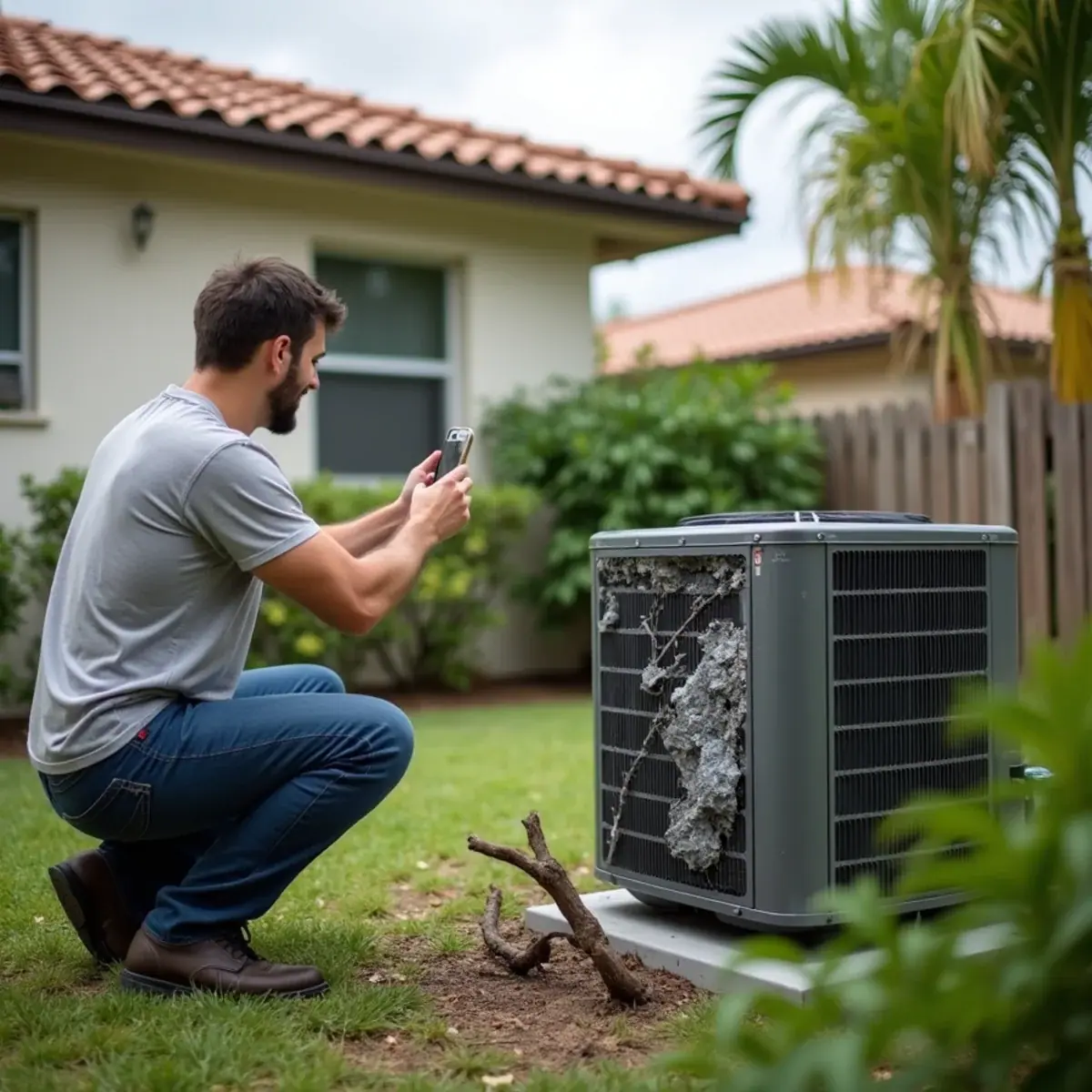
- Photograph before cleanup. Shoot all four sides, the debris that hit it, waterline marks on the unit and the house, and the data plate with the model and serial number.
- Report the claim promptly. Florida has shortened claim-reporting deadlines in recent years, so check yours and don't wait.
- Prevent further damage. Reasonable steps like tarping or shutting off power are usually expected. Keep receipts.
- Get a written professional diagnosis. It should state the cause (impact, water intrusion, or pre-existing corrosion) and what's repairable.
- Get an itemized estimate and keep damaged parts until your adjuster says otherwise.
What we provide, and what we don't
Through our hurricane and storm AC service, Brothers Services Cooling & Heating can inspect, test, photograph and document the system, then write up findings and an itemized estimate. We don't negotiate with insurers or act as a public adjuster, and the claim stays between you and your carrier. If the house is too hot to wait for an adjuster, emergency AC repair can often restore cooling while the damaged parts are preserved and photographed. Ask your insurer first.
North Port and Port Charlotte: lessons from recent storms
Hurricane Ian in 2022 left many North Port homes with condensers knocked off pads, crushed by debris or sitting in floodwater. In Port Charlotte, plenty of 1960s–1980s homes still run older equipment and original ducts, which invites pre-existing condition questions after a storm. The practical lesson: photograph your outdoor unit in good shape at the start of each hurricane season, keep maintenance receipts, and make sure it's strapped down. Evidence of a healthy unit before the storm is the strongest thing you can bring to a claim.
How we document storm damage so an adjuster can follow it
After a storm, the hardest question on an AC claim is cause: impact, water or something that was already wrong. On a typical post-storm call we try to answer it with evidence rather than opinion, and we write it up in that order.
- Impact signs. Dents and crushed fins on the side facing the debris, a cracked service valve, a kinked or torn line set, a cabinet shoved off its pad. We photograph the debris next to the damage before anything is moved.
- Water signs. A silt line inside the cabinet, mud in the base pan, fresh corrosion on contactor terminals and the compressor terminal box. On a unit that sat in water we test compressor winding resistance and insulation resistance to ground before anyone tries to start it.
- Pre-existing signs. Evenly pitted fins, old oil stains at a braze joint, a rusted-through base pan. Those point to wear, and we say so plainly even when it isn't the answer the homeowner hoped for.
The two mistakes we see most: flipping the breaker on a flooded unit to see if it runs, and letting someone haul the old condenser away before the adjuster has seen it. Both make a fair claim harder to prove.
Get a written assessment after the storm
Call (831) 461-3437 and Goran will tell you plainly what's damaged, what's repairable and what it will cost, in writing, so you can make your next call to the insurer with facts in hand.
FAQ
Common questions
Is a power surge after a hurricane covered by homeowners insurance?
It depends on the cause and your policy. A direct lightning strike is often covered. A surge when utility power comes back may be treated differently, and some policies limit or exclude it. Your insurer can tell you how your wording applies. Either way, a written diagnosis showing burned contactors, boards or capacitors helps establish what failed and why.
Should I replace my AC before the adjuster inspects it?
Talk to your insurer before replacing anything. Reasonable steps to prevent further damage are usually expected, but replacing the whole system before inspection can make the loss harder to verify. Document everything with photos, keep the damaged components, and ask whether a temporary repair is acceptable if the heat is a health risk for someone in the home.
Will a flood policy cover my outdoor condenser?
NFIP building coverage generally lists central air conditioning equipment as covered property, and many private flood policies do too, subject to their own deductibles and limits. Coverage details vary, so read your declarations page and ask your agent. Remember that new NFIP policies typically have a 30-day waiting period before coverage starts.
Is my AC covered as part of the house or as personal property?
A central system that's attached to the home, including the outdoor condenser on its pad and the indoor air handler, is generally treated as part of the dwelling on a Florida homeowners policy. Window units and portable ACs are usually personal property, with their own limits and deductible rules. Policy forms vary, so confirm on your declarations page or with your agent before filing.
About the author
Written by the team at Brothers Services Cooling & Heating, an owner-operated HVAC contractor in Venice, FL. Goran and crew repair, replace and maintain air conditioners and heat pumps across Sarasota County every day — this article reflects what we see on real Gulf Coast service calls.