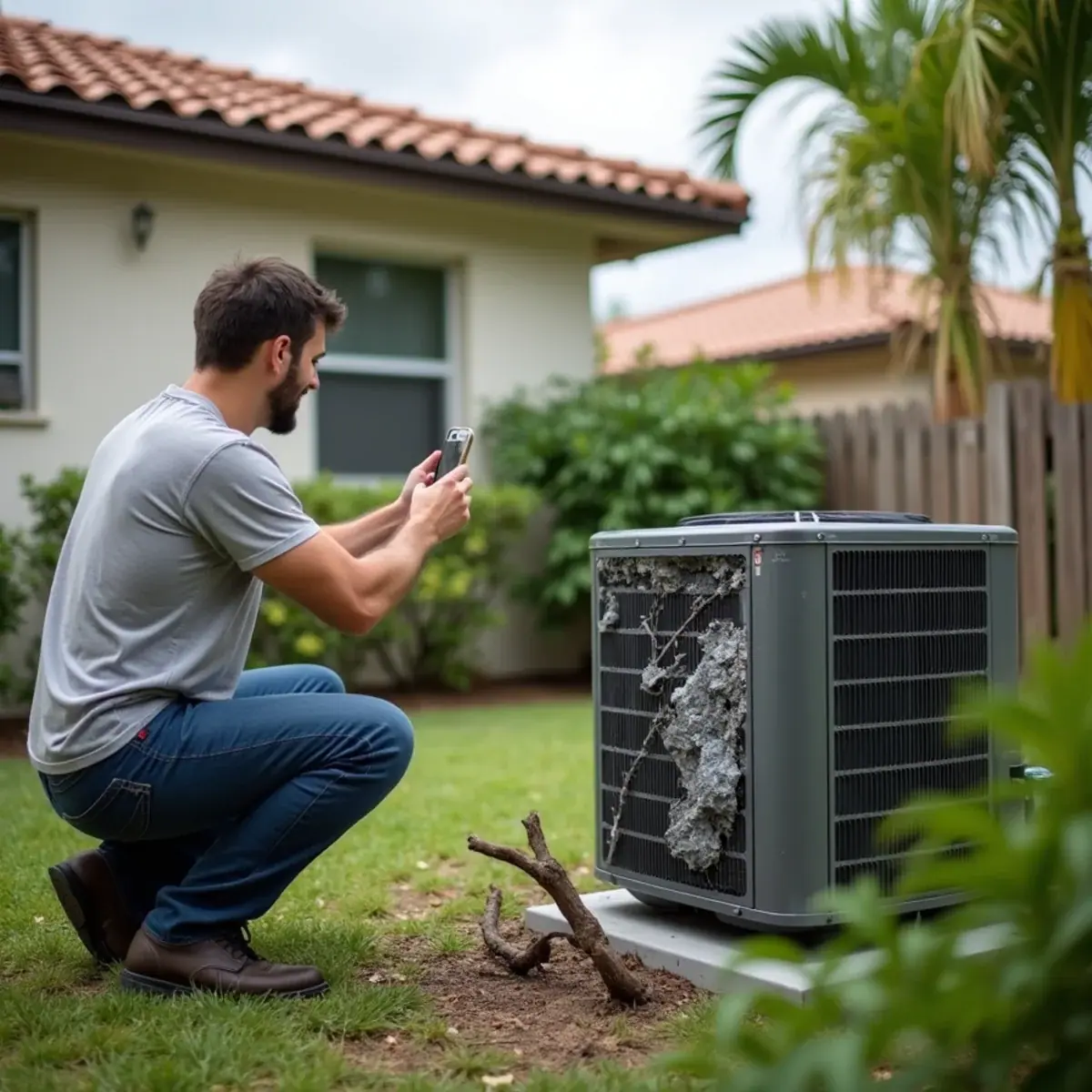
Hurricanes hit air conditioners three ways — wind, water and electrical surges. We help you prepare for all three and get your system running safely again afterward.
5.0 from 22 Google reviews•5 yrs HVAC experience•FL Certified A/C Contractor•Same-day service
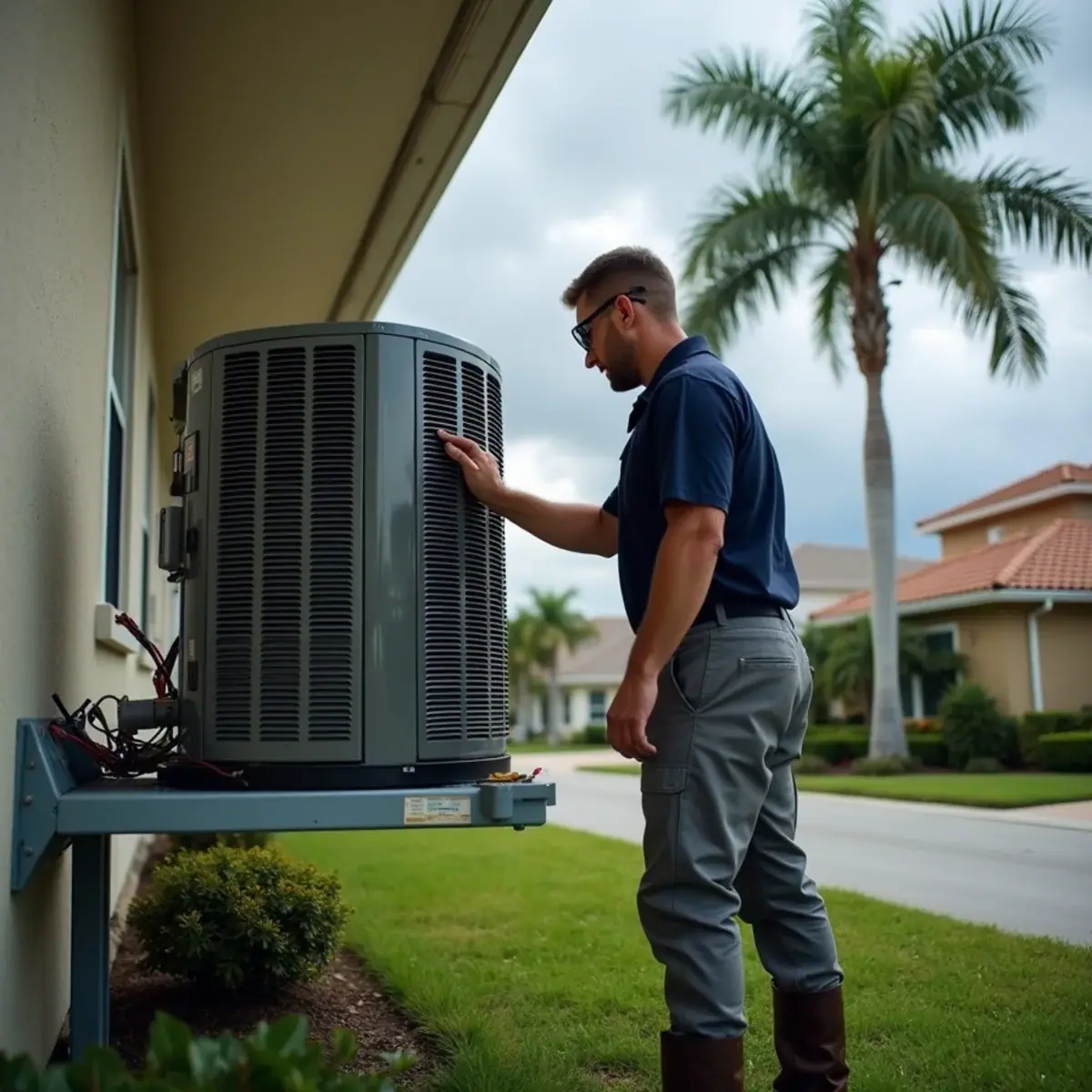
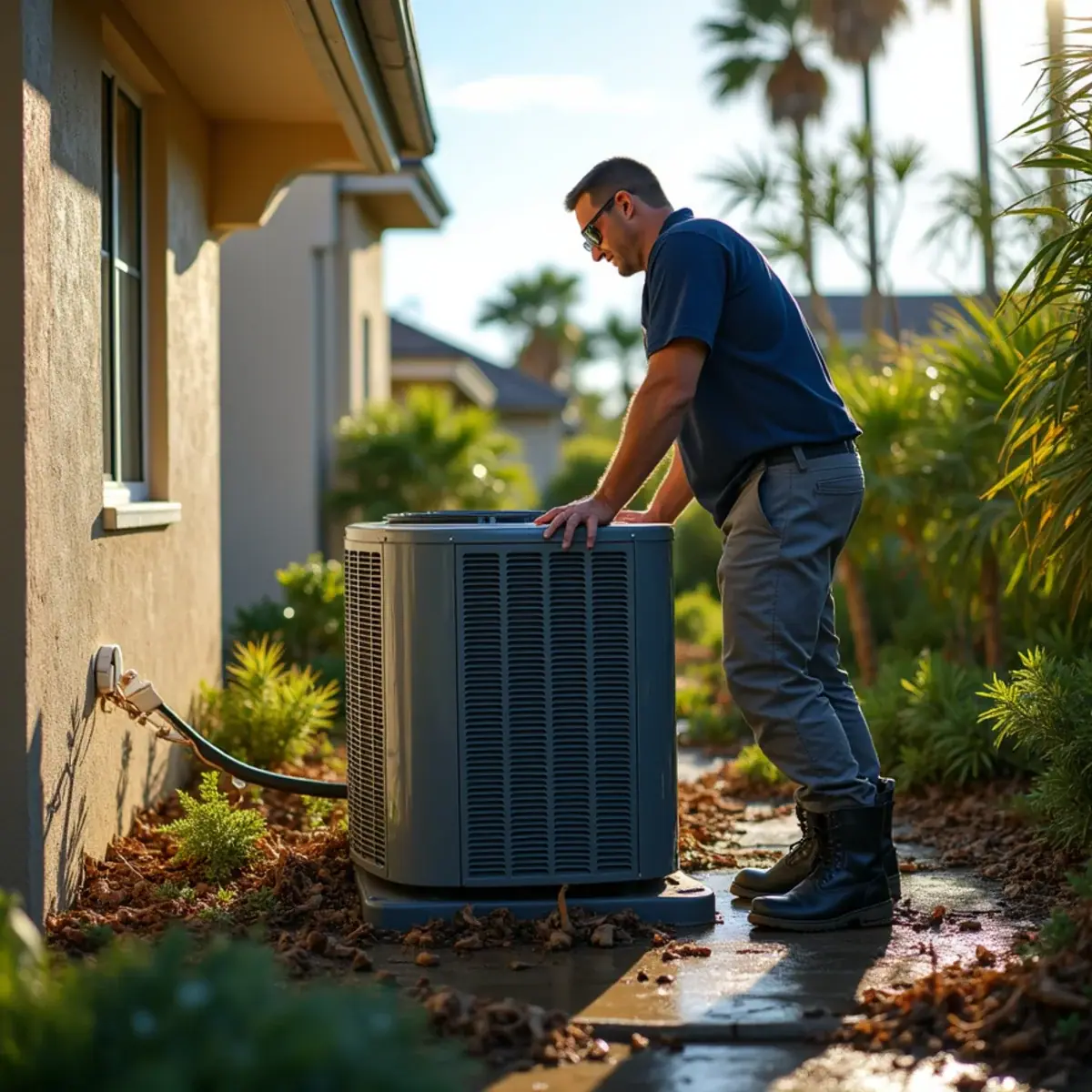
Hurricane AC service in Venice, FL covers two jobs: getting your system ready before a storm with tie-downs, surge protection and a clear shutdown plan, and inspecting it afterward for flood, wind and surge damage before anything is switched back on. Brothers Services Cooling & Heating handles both sides of the season, from June 1 through November 30, and documents what we find with photos you can hand to an insurance adjuster. After a storm, call (831) 461-3437 before restarting a unit that may have taken water.
Anyone here for Hurricane Ian in September 2022, or for Helene and Milton barely two weeks apart in fall 2024, remembers what came after the wind: days without power, flooded yards and the anxious moment of switching the AC back on. Some systems started right up. Others hummed and died, tripped breakers, or ran without cooling because a surge had cooked a board or capacitor.
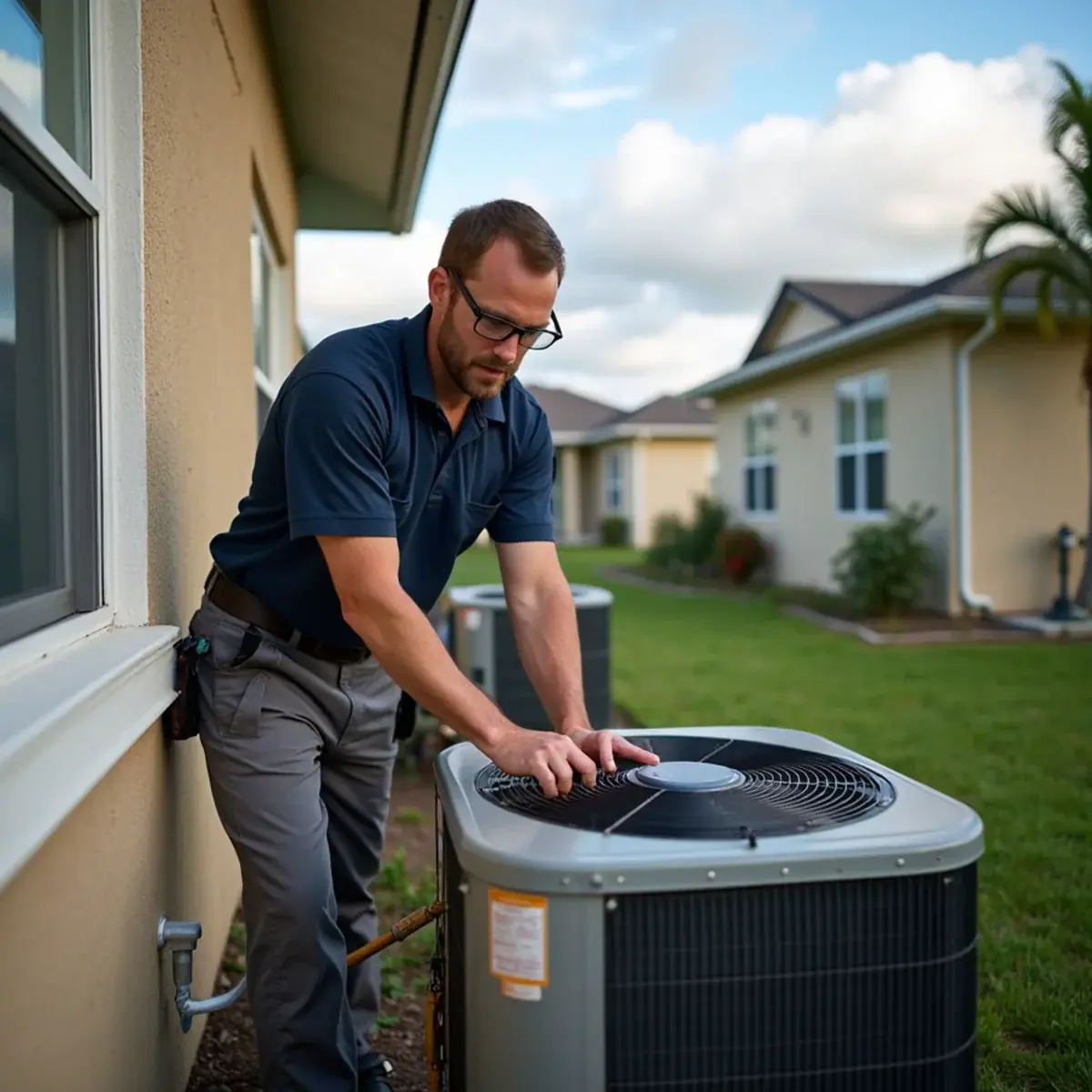
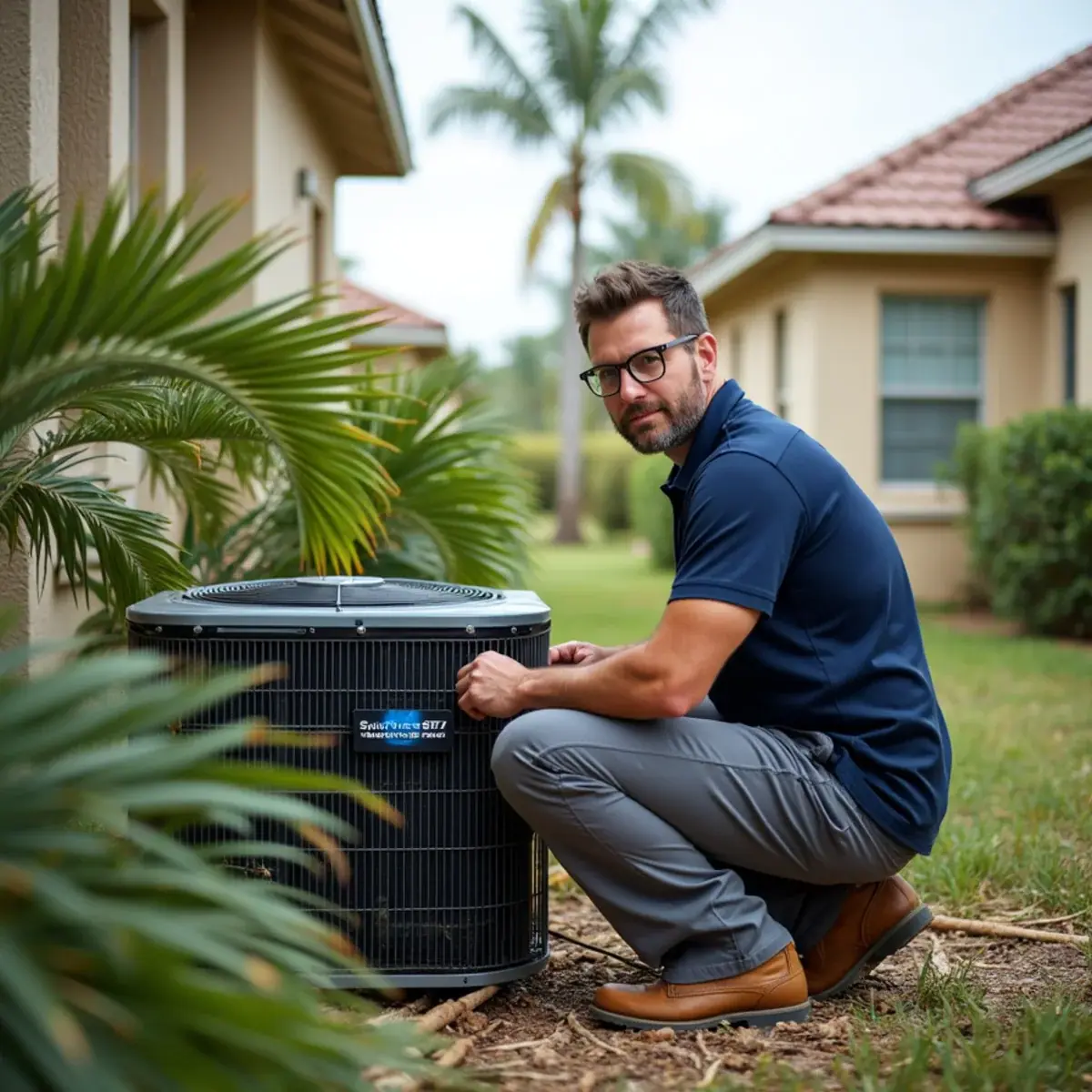
Brothers Services Cooling & Heating provides hurricane AC service in Venice, FL on both sides of a storm. Before the season, which runs June 1 through November 30, we confirm your condenser is anchored, add surge protection and show you how to shut the system down. Afterward, Goran and our team check for water, wind and electrical damage before anything restarts, so a repairable unit isn't ruined by powering it up too soon.
Warning signs
Storm damage we find on air conditioners
After a hurricane or tropical storm, these problems show up most often on our service calls.
Flooded condensers
If floodwater or surge reached the outdoor unit, the compressor terminals, fan motor windings, contactor and boards may have been submerged. Salt water is especially destructive. A flooded unit should never be powered on before inspection.
Power surge damage to boards and capacitors
When utility power drops and returns repeatedly, or lightning strikes nearby, voltage spikes hit the equipment. We commonly find blown run capacitors, pitted or welded contactors, dead control boards and burnt transformers.
Units shifted off their pads
High winds can walk an unsecured condenser off its slab, kinking or snapping refrigerant lines and yanking the electrical whip loose.
Debris-packed or crushed fins
Wind drives sand, shingle grit, oak leaves and branches into the coil, choking airflow and straining the compressor.
Water in the air handler or ducts
Roof damage or wind-driven rain can soak attic ducts and air handlers. Wet insulation and a flooded pan need attention before damp conditions settle in.
What’s included
What our hurricane AC service includes, before and after the storm
Prep and recovery are priced and scheduled separately, but they share one goal: an air conditioner that survives the storm and restarts without a second failure.
Pre-season anchoring check
Straps, anchors and the pad or stand are inspected for rust, missing fasteners and cracked concrete, and we photograph the setup so you have a dated before-the-storm record.
Surge protection matched to the system
A surge protective device at the condenser disconnect, or a whole-home unit at the main panel when that makes more sense, chosen for your equipment and electrical setup.
A shutdown walkthrough
We show whoever will be home where the disconnect and AC breaker are, and label them, so the system can be shut down quickly even with the lights out.
A flood-exposure review
On low lots, we compare the condenser's height with the flood information you have for the property, such as an elevation certificate, and talk through a rated stand before the season, not after the water.
Post-storm damage inspection
Water lines on the cabinet, compressor and fan-motor winding tests, board and capacitor checks, line set and pad condition, plus a look at the air handler and attic ducts for rain intrusion.
An insurance-ready damage report
Dated photos, readings and a written explanation that separates wind, water and surge damage, which matters because policies treat those causes differently. You decide what goes to your adjuster.
How we work
Pre-storm prep and post-storm restart, step by step
We handle both halves of the job and won't skip the inspection just to get you cooling sooner.
1
Anchor the condenser
We verify or install tie-down straps and anchors that secure the unit to its pad or stand, meeting the Florida Building Code's wind requirements for outdoor equipment.
2
Add surge protection
A surge protective device at the disconnect or main panel helps shield the compressor, capacitors and boards when the grid bounces.
3
Evaluate elevation
On flood-prone lots, we discuss raising the condenser onto a rated stand above expected water levels, within code and clearance rules.
4
Inspect before power-up
After a storm, we look for water lines on the cabinet, test compressor and motor windings where needed, and inspect wiring, capacitors, contactors, refrigerant lines and the pad.
5
Restart and document
Once it's safe, we restart the system, verify pressures and temperatures, and write up our findings with photos for any insurance claim.
Honest pricing
What affects hurricane prep and storm repair costs
Prep work is predictable; storm repair depends on what the wind and water did.
Existing mounting
Some units only need their straps inspected; others need new anchors, straps or a new pad.
Type of surge protection
A device at the condenser is a smaller job than a whole-home protector at the main panel.
Stand height and materials
Raising a condenser means a rated stand, extended refrigerant lines and wiring, and possibly a permit.
Extent of flood or surge damage
A unit that lost only a capacitor is a small repair; one that sat in salt water may need replacing.
Prep work or storm repair, you get a written price for the job before any work starts.
What to do with your AC when a hurricane is coming
Clear patio furniture, pots and yard debris away from the condenser.
As the storm approaches, set the thermostat to Off and switch off the outdoor disconnect and AC breaker.
If you cover the unit, remove the cover before running it again.
Photograph the unit, pad and nameplate for insurance records.
When power returns, look at the condenser before flipping anything on. A water line on the cabinet, a unit off its pad, bent lines or debris in the fan means leave it off and call (831) 461-3437. If everything looks dry and in place, reset the breaker. If the unit hums without starting or the breaker trips again right away, stop — that's a job for emergency AC repair, not another reset. A humming condenser with a motionless fan often points to a surge-damaged capacitor or condenser fan motor. See our article on restarting your AC after a hurricane for the full sequence.
Inland neighborhoods along the Myakka River saw serious flooding after Ian. If you're in North Port, our storm recovery lessons from Hurricane Ian explain what we check in flood-exposed systems. If a storm finishes off an aging system, our AC installation work includes new tie-downs and a pad or stand suited to your lot.
Why Brothers Services
Why choose Brothers Services for hurricane AC service
Based here, working here after the storm
We're a Venice company, so once the roads reopen we're already in the neighborhood. Our phone line runs 24/7, and after a big storm we'll give you an honest place in line instead of a promise we can't keep.
A straight repair-or-replace call
After a storm, one unit needs a capacitor and the next is finished. Goran diagnoses each one himself and puts both options in writing, with a free estimate on the replacement side.
Reports an adjuster can follow
Damage is explained in plain language with photos, and we never make coverage decisions for you. Clear communication shows up across our 22 five-star reviews; Ronald B. noted that we communicated each step of his repair.
Licensed, code-anchored replacements
If a storm finishes off a system, our Florida Certified A/C Contractor (CAC) license covers the permitted replacement, and the new condenser goes in with wind-rated tie-downs and a pad or stand suited to your lot.
What neighbors say about our hurricane & storm ac service work
“Excellent service and communication. Goran quickly added us to his schedule and arrived the next day. His commitment to diagnosing our problem was impressive. He replaced our compressor for half the price of other estimates. We are very satisfied with Brothers Services. I highly recommend this company. Ron from Chestnut Creek.”
RRon A.Google review · AC compressor replacement
“Goran was extremely professional and friendly when our fan motor went out during the hottest time of the year! He quickly responded to diagnose the problem and communicated with us each step of the way! His prices were very reasonable and we would highly recommend his company.”
RRonald B.Google review · AC fan motor replacement
Great price
“I am more than happy to share that a routine maintenance exceeded my expectations!!! This guy goes above and beyond your average technician!!!! I highly recommend them. Their pricing is excellent!!! It's difficult to find good honest, hard-working people down here in Florida!”
MMike A.Google review · HVAC system maintenance
“I called the day before I needed a last minute THIRD inspection of my A/C for the sale of my house. Goran was very professional in on intense situation and he did a thorough job for me. I won't hesitate to call him and his team the next time I need work done!”
ZZoran M.Google review · Home sale HVAC inspection
“Excellent service, good communication and quality of services, phenomenal price of services, for every home and pocket! Well done brothers service!!!!”
AAleksandar D.Google review
Great price
“Goran from Brothers Service was incredibly fast and efficient. He responded immediately during the heatwave, providing professional and affordable service. Highly recommend for anyone in need of quick HVAC assistance!”
NNeli L.Google review · A/C system maintenance
Swipe for more reviews →
FAQ
Hurricane & Storm AC Service FAQs — Venice, FL
Should I turn off my AC during a hurricane?
Yes. Once the storm arrives and power starts flickering, set the thermostat to Off and turn off the outdoor disconnect and breaker. That protects the compressor and electronics from repeated spikes and brownouts. Pre-cool the house beforehand if you like, and leave everything off until power is stable and you've checked the outdoor unit.
Can I run my AC if the outdoor unit was flooded?
Not until it's inspected. Water, and especially salty surge water, can short motor windings, compressor terminals and control boards, and powering on a wet unit can turn a repairable problem into a total loss. We check the electrical components and windings, then tell you whether it can be dried out and restarted or needs replacement.
Are hurricane tie-downs required for AC units in Florida?
Yes. The Florida Building Code requires outdoor condensers to be anchored against wind loads, typically with straps or brackets fastened to the pad or stand. Many older installations have missing, rusted or loose straps. We can check yours and bring them up to standard, and every new system we install is anchored properly.
Will insurance pay for storm damage to my AC?
Sometimes. It depends on your policy, whether the cause was wind or flood, your hurricane deductible and whether you carry flood coverage. We can't make coverage decisions, but we document damage with photos, readings and a written explanation. Our article on hurricane AC damage and homeowners insurance covers the basics.
Should I cover my outdoor AC unit before a hurricane?
A cover won't stop wind-driven debris much, and a tarp wrapped around the sides can trap moisture against the coil for days. If you want some protection from falling branches, a breathable top-only cover or a sheet of plywood strapped securely on top is the usual choice. Either way, remove it before the system runs again, because a covered condenser can't reject heat.
Can a portable generator run my central air conditioner?
Most portable generators can't start a central AC compressor, whose starting surge is far higher than its running load. A standby generator sized for the air conditioner, sometimes paired with a soft-start kit, can work. The generator connection itself belongs to a licensed electrician, since an improper hookup can backfeed utility lines. We can give your electrician the compressor's rated load so the generator gets sized correctly.
How long should I wait to turn the AC back on after power returns?
Give the grid time to settle. Right after restoration, power often flickers or sags as crews switch circuits, and those dips are hard on a compressor. Wait until the lights have stayed steady for a while, walk out and look at the condenser, then reset the breaker and turn the thermostat back to Cool. If anything hums, buzzes or trips, shut it off and call us.
Most hurricane damage to air conditioners is preventable or at least limitable. Here is what to do in May, what to do the day before landfall, and what to check before you turn the system back on.
Turning the AC back on right after the power returns is how many storm-weakened systems fail for good. Use this step-by-step restart checklist before you touch the thermostat.
Wind and debris damage to your AC is often covered, flood usually isn't, and wear and tear never is. Here's how the hurricane deductible changes the math and how to document the damage properly.
5 min read
Hurricane & Storm AC Service near you
Storm risk isn't the same on every street. Low canal lots in South Venice and Englewood worry about surge and standing water, neighborhoods near the Myakka River in North Port learned about inland flooding the hard way, and Punta Gorda and Port Charlotte took the brunt of Ian. We schedule pre-season hurricane prep across all of them from our Venice base, and after a storm we sort calls by safety first, so a flooded unit or a sparking disconnect moves to the front of the line.