Prevention
Hurricane Season HVAC Prep: Tie-Downs, Surge Protection and Shutoff
Most hurricane damage to air conditioners is preventable or at least limitable. Here is what to do in May, what to do the day before landfall, and what to check before you turn the system back on.
Quick answer
To prep your AC for a Florida hurricane, check in May that tie-down straps are tight and rust-free, the pad is level and surge protection works. Before landfall, pre-cool the house, clear loose yard items and switch off the thermostat, breaker and outdoor disconnect. Afterward, inspect for flooding and damage before restarting.
When a storm is two days out, the lines at the hardware store are for plywood and generators. Very few people think about the outdoor condenser until it is lying on its side in the yard or its control board has been fried by a surge when power comes back. Your AC is one of the most expensive pieces of equipment you own, and preparing it is mostly a matter of doing the right things early. This guide splits the work into three windows: before the season, before the storm, and after it passes.
Before the Season: May Is the Time
Check the tie-downs
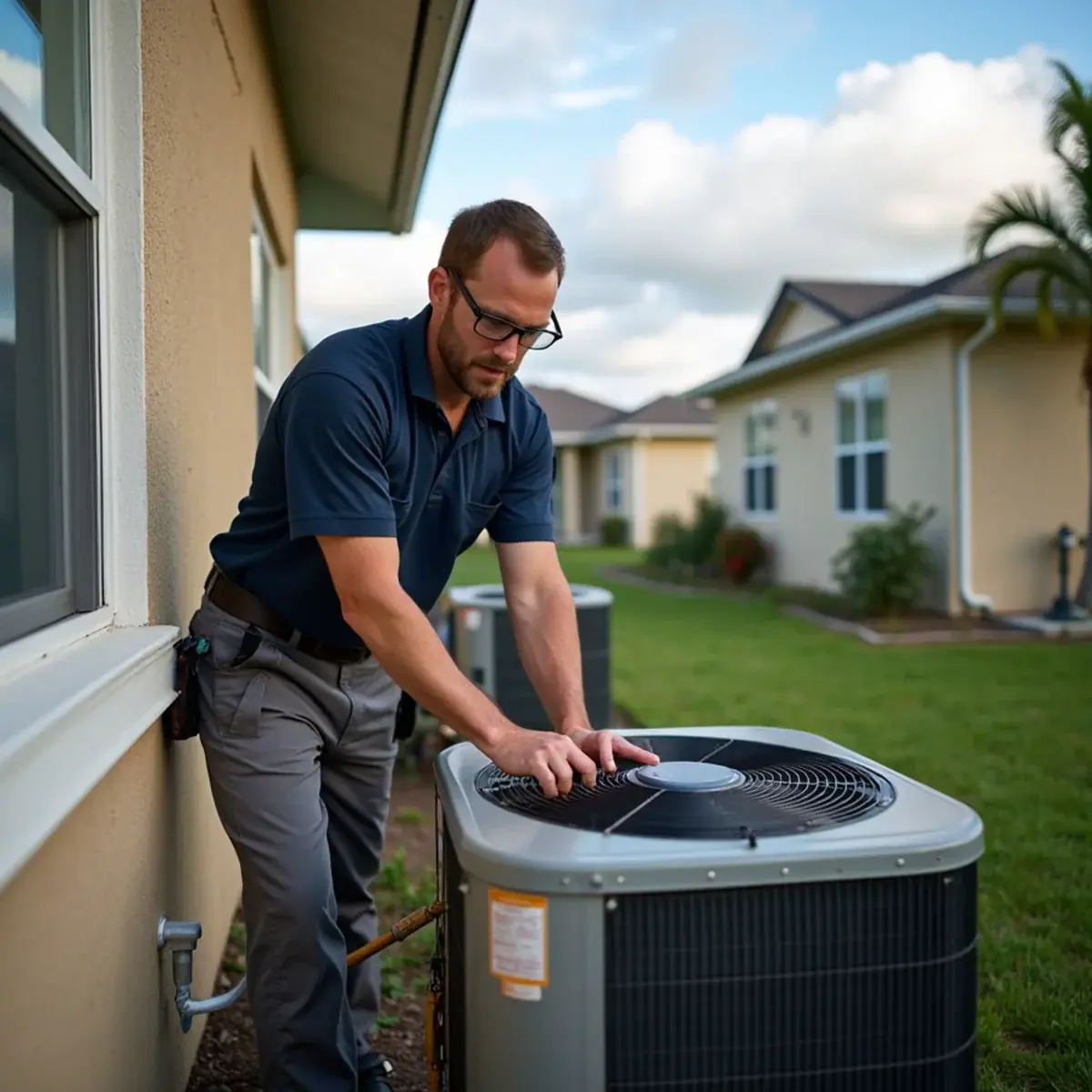
The Florida Building Code requires outdoor condensers to be anchored against wind, typically with metal straps or brackets fastened from the unit to a concrete pad or stand. Over time, screws rust out, straps loosen after a replacement or a lawn crew knocks them, and some older units were never strapped at all. Walk out and look. Each strap should be tight, free of heavy rust and fastened on both ends. Near the water, stainless or coated hardware lasts far longer against salt.
Look at the pad and elevation
A pad that has sunk or tilted puts stress on refrigerant lines and lets water pool around the base. In flood-prone areas, consider whether the unit should sit on an elevated, wind-rated stand. Relocating or raising equipment is permitted work, so plan it well before any storm is on the map.
Add or test surge protection
Storms bring lightning, and they bring power that flickers on and off as crews restore lines. Both can damage capacitors, contactors, compressors and the electronic boards in modern variable-speed systems. The best approach is layered: a whole-home surge protector at the main panel plus a dedicated HVAC surge device at the outdoor disconnect. Many surge devices have an indicator light; if yours is off or red, it has already taken a hit and needs replacing.
- Straps tight and rust-free on all sides
- Pad level, no cracks or washout underneath
- Surge protector indicator showing protected
- Loose yard items stored away from the condenser
- Photos of the outdoor unit, air handler and nameplates saved for insurance
- A pre-season tune-up done so any weak parts are replaced before storm season
Plan backup power for the AC before you need it
Many Florida hurricane checklists stop at “buy a generator.” If keeping the house cool during a long outage matters to you, especially with elderly family or medical needs at home, the planning has to happen in spring, not the day before landfall:
- Photograph the outdoor unit’s nameplate. The compressor’s rated amps and locked-rotor amps (RLA and LRA) are what an electrician needs to size a generator that can actually start it.
- Ask about a soft-start kit. It eases the compressor’s startup surge, which can let a smaller generator run the AC; we can tell you whether your compressor is a good candidate.
- Have a licensed electrician install a transfer switch or panel interlock, with a permit. That is the only safe way to connect a generator to household circuits.
- Decide ahead of time what the generator will carry. Running the AC alongside the fridge, well pump and water heater may be more than it can handle.
When a Storm Is Coming: The Last 48 Hours
- Pre-cool the house a few degrees below your normal setpoint and close blinds on sunny sides. A cool, dry house buys you comfort if the power goes out.
- Bring in patio furniture, planters, grills and anything else that could become a projectile against the condenser.
- Clear gutters and downspouts that discharge near the unit so water drains away from the pad.
- When strong winds arrive or officials warn of surge and flooding, set the thermostat to OFF, then switch off the breaker and pull or switch off the outdoor disconnect.
- Leave it off until the storm has passed and power has been stable.
Should you cover the unit?
Never cover a condenser while it can run. It needs to move large volumes of air across its coil, and a tarp can cause the compressor to overheat. If you choose to cover the top to keep out flying debris, do it only after the power is off at the disconnect, and remove the cover completely before restarting. A strapped-down plywood sheet over the top is the most anyone should need. Wrapping the sides traps moisture against the coil.
After the Storm: Inspect Before You Restart
The urge to get the AC running the moment power returns is understandable. Resist it for a few minutes and walk around the unit first. Our step-by-step post on safely restarting your AC after a hurricane covers this in detail, but the short version:
- If floodwater or storm surge reached the outdoor unit or the air handler, do not turn it on. Saltwater and flooding damage electrical components and controls in ways that are not visible, and powering them up can make it worse.
- Look for a unit that has shifted on its pad, crushed fins, torn line-set insulation or kinked refrigerant lines.
- Clear branches and leaves off the top and away from the sides.
- Check that the disconnect box is intact and dry.
- If everything looks normal, restore power at the breaker and disconnect, wait several minutes, then turn the thermostat back to cooling and watch for unusual noises, smells or tripping.
Where Storm Prep Matters Most Locally
Across Sarasota County, the combination of long hurricane seasons, frequent summer lightning and systems that run nearly year-round makes surge protection and anchoring worthwhile almost everywhere. Coastal and low-lying streets add surge and flood risk on top of wind.
In Englewood along Lemon Bay, we look especially closely at older manufactured and elevated homes, where condensers sometimes sit on stands or platforms with fasteners that salt air has been eating for years. A strap that looks fine from ten feet away can crumble when you touch it.
What Storms Actually Break on Venice-Area Systems
Wind gets the headlines, but on the calls we run after a storm passes through the Venice area, most failed systems are standing upright and look fine. The damage is electrical, and it follows a pattern:
- Contactors and capacitors that took the flickering on-off-on of restored power. A pitted contactor or a capacitor reading well under its label is the most common post-storm repair we make.
- A blown low-voltage fuse on the air handler control board, often 3 or 5 amps, after a surge. The thermostat goes blank and the owner assumes the whole system is dead.
- Tie-downs that held but the cabinet didn’t. Straps screwed into a rusted base pan can pull through the metal. We look at what the screw bites into, not just the strap.
- Crushed fins and torn line insulation on the windward side, from debris rather than wind load.
Before restarting a system after an outage, we measure voltage at the disconnect. Equipment is built to run within about 10% of its nameplate voltage, and a sagging neighborhood grid can sit below that for hours, which overheats compressor windings. Raising a condenser on a stand is a trade-off, too. It protects against surge water, but the unit catches more wind, so the stand and its anchors must be rated and permitted. One avoidable mistake still turns up every season: a tarp wrapped tight around the sides and left on for days while the system runs.
If the Storm Already Did Damage
Take photos before anything is moved, then call for an inspection. Our hurricane and storm AC service documents damage clearly, which helps with any claim; our guide to hurricane AC damage and homeowners insurance explains what adjusters usually look for. If the house is heating up with vulnerable people inside, treat it as an emergency AC repair call. Reach Goran at (831) 461-3437, or request a pre-season check now while there is time.
FAQ
Common questions
Should I turn off my AC during a hurricane?
Yes, once strong winds arrive or flooding and surge are possible. Set the thermostat to OFF, then switch off the breaker and the outdoor disconnect. That protects the compressor and electronics from surges, brownouts and repeated power cycling. Leave it off until the storm has passed, power is stable and you have checked that the unit was not flooded or damaged.
Are hurricane straps required on AC units in Florida?
The Florida Building Code requires outdoor condensing units to be anchored to resist wind loads, and new installations and replacements are expected to meet that requirement through the permit process. Older units may have loose, rusted or missing straps, so it is worth checking yours before the season and having any corroded hardware replaced.
Can I run my AC right after the power comes back?
Wait. First confirm the unit was not flooded, is still level on its pad, and has no visible damage or debris. Then give power a few minutes to stabilize before turning the thermostat back on. If water reached the unit or the air handler, have it inspected before restarting, since flood-damaged electrical parts can fail dangerously.
How do I prepare a ductless mini-split for a hurricane?
Start with the outdoor unit’s mount. Wall brackets should be lagged solidly into block or framing with no rusted bolts, and ground units need anchoring just like a central condenser. Mini-splits rely on inverter boards that are sensitive to surges, so a surge device at the disconnect is worth having. Before the storm, turn the system off with the remote, then kill power at the disconnect.
About the author
Written by the team at Brothers Services Cooling & Heating, an owner-operated HVAC contractor in Venice, FL. Goran and crew repair, replace and maintain air conditioners and heat pumps across Sarasota County every day — this article reflects what we see on real Gulf Coast service calls.