Core Service
Heat Pump vs. AC With Heat Strips: What Works Best in Venice, FL?
In Venice's mild winters a heat pump heats with a fraction of the electricity heat strips use, while the strips stay on as backup. Here's how both work and when each makes sense.
Quick answer
A heat pump is usually the smarter choice for a Venice home, and heat strips work best as its backup. On typical Southwest Florida winter nights a heat pump moves two to three times more heat per kilowatt-hour than strips, which convert electricity one-to-one. Straight cool with strips still suits homes that rarely heat.
For most Venice-area homes a heat pump is the better way to heat, with electric heat strips kept in the air handler as backup. The reason is simple physics: heat strips make heat from electricity at a one-to-one ratio, while a heat pump moves heat that's already in the outdoor air and delivers two to three times more heat per kilowatt-hour on a typical Southwest Florida winter night. Strips still have a job, just not the main one.
Two ways to heat a Florida home
Straight-cool AC with heat strips
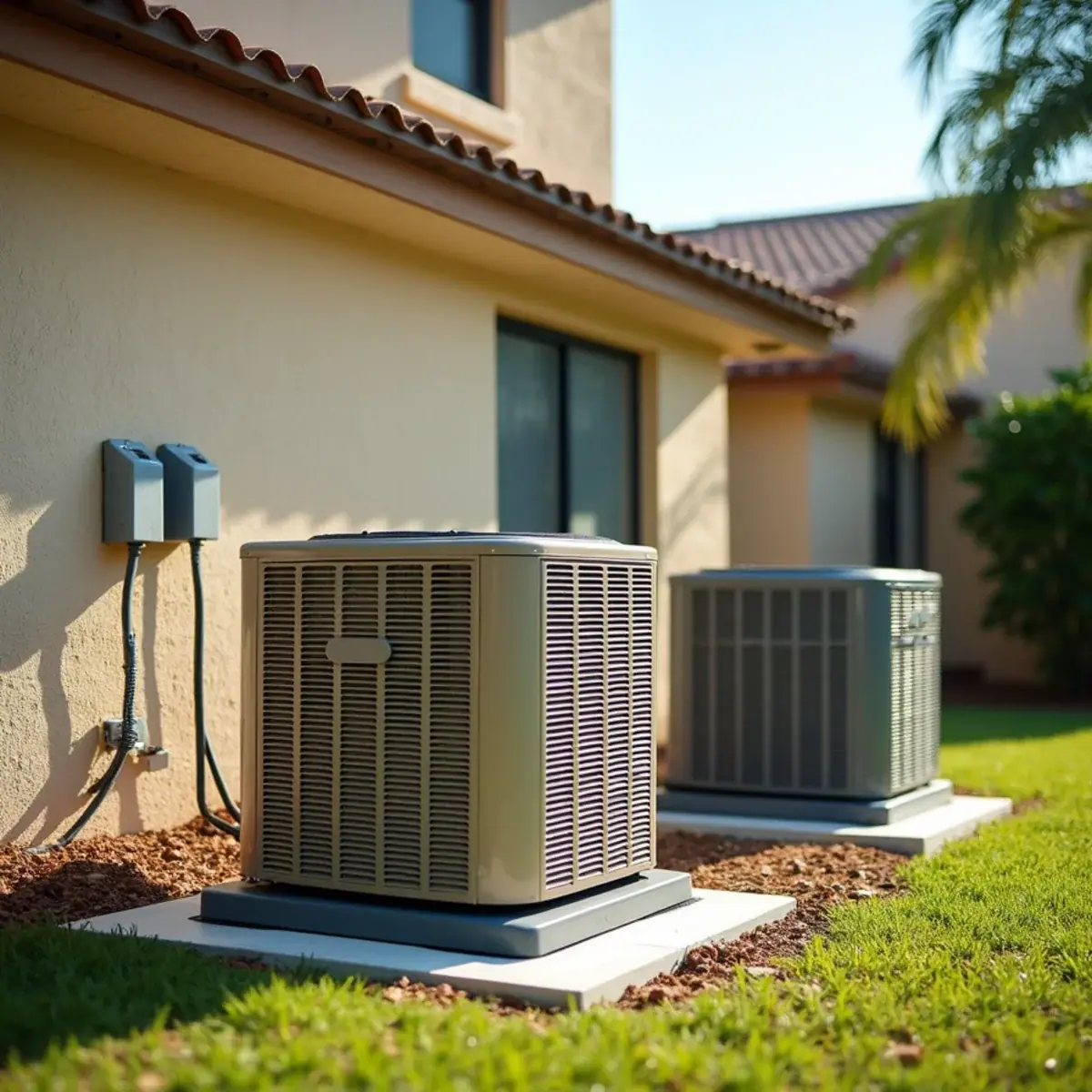
A cooling-only condenser handles summer. For winter, the air handler contains an electric heat kit: nichrome resistance coils, usually 5, 8, 10 or 15 kW, controlled by sequencers and protected by high-limit switches. Each kilowatt produces about 3,412 Btu/h of heat, and every kilowatt-hour you pay for becomes exactly one kilowatt-hour of heat. Simple and cheap to buy, but costly to run.
Heat pump
A heat pump is the same basic machine as an AC, plus a reversing valve and a defrost control. In winter the reversing valve flips the refrigerant flow so the outdoor coil absorbs heat from outside air and the indoor coil releases it into your home. At the 50s and 60s outdoor temperatures typical of a Venice winter, that transfer is highly efficient. Heat strips stay in the air handler as auxiliary heat.
| Factor | Heat pump (with backup strips) | AC with heat strips |
|---|---|---|
| How it heats | Moves heat from outdoor air | Electric resistance coils |
| Heat per kWh in Venice winter weather | Roughly 2–3 times more | One-to-one |
| Feel at the vent | Warm, steady air in longer cycles | Hotter air in shorter bursts |
| Summer cooling | Same as a comparable AC | Same |
| Extra parts to maintain | Reversing valve, defrost board and sensors | Sequencers and limit switches only |
| Upfront cost | Higher | Lower |
| Best fit | Full-time residents and winter-season snowbirds | Homes that rarely use heat |
Why Venice winters favor heat pumps
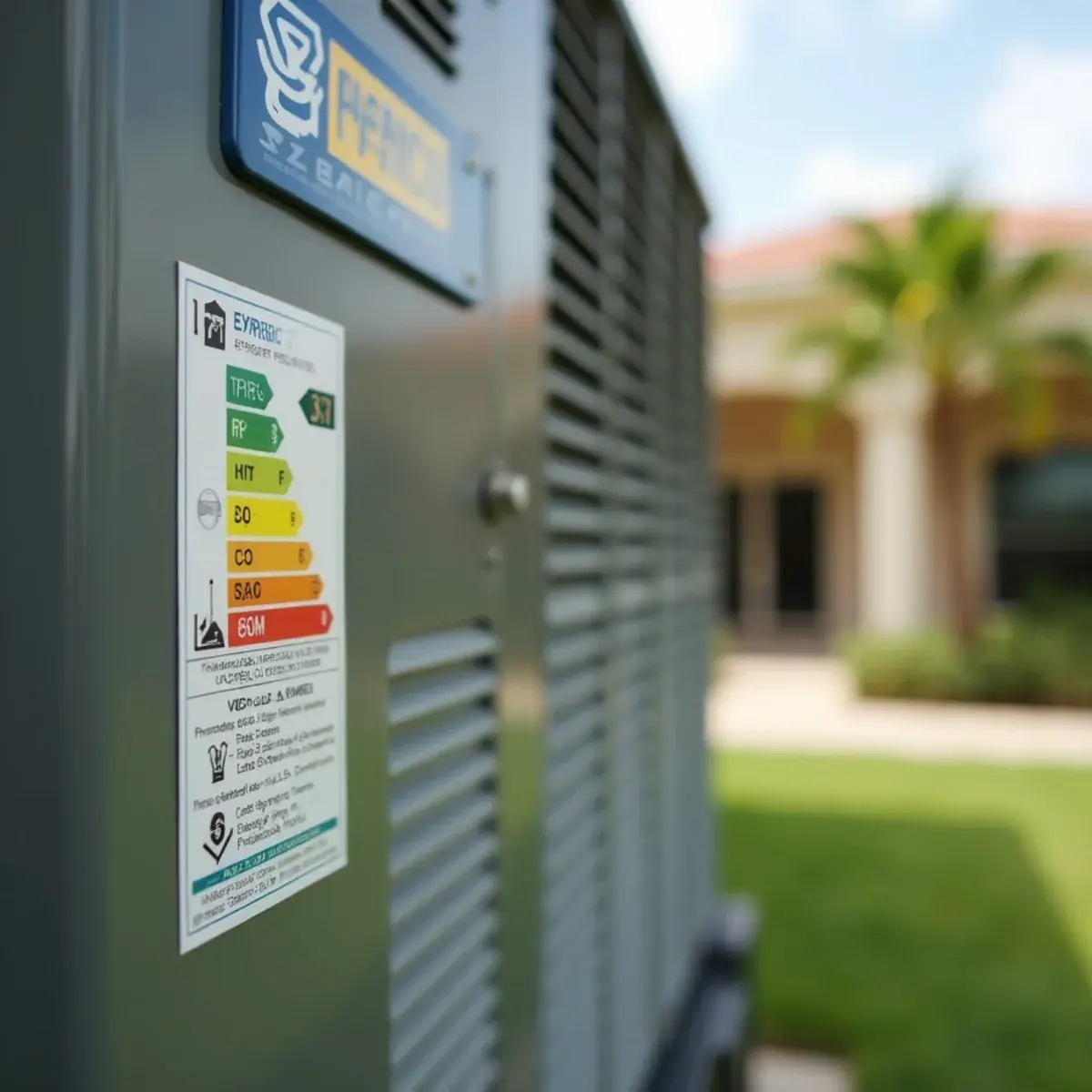
Our winter nights usually fall into the 50s, with a handful of cold fronts pushing into the 40s and a true freeze being rare. Heat pumps stay efficient well above freezing, so they handle nearly every heating hour here without help. And because the heat pump is also your air conditioner, it has to meet the same federal standards: at least 14.3 SEER2 for cooling and 7.5 HSPF2 for heating. Our SEER2 guide explains both ratings.
Snowbirds are here for exactly the months when heat runs, so they often benefit most from a heat pump.
How much heating Venice actually does, and what the difference is worth
Florida isn't one heating climate. Panhandle and North Florida homes heat through real winters, while Naples, Miami and the Keys barely switch the heat on. Venice sits in between: most winters bring a few weeks of cool nights and a handful of cold-front mornings, so heating hours are real but limited. That's why the savings question depends on how you live in the house more than on the equipment.
The math is easy to run yourself. A 10 kW strip kit running for one hour uses 10 kWh. A heat pump delivering the same heat on a 50 °F night uses roughly a third to a half of that. Multiply the difference by the hours your heat actually runs each winter and by the rate per kWh on your bill. For a house that heats a few chilly mornings a year, the gap is modest. For a household keeping the heat on through January and February evenings, it adds up quickly.
Where heat strips still earn their keep
- Auxiliary heat on the coldest mornings, when the heat pump alone can't match the home's heat loss.
- During defrost, strips often energize briefly so you don't feel cool air while the outdoor coil clears.
- Emergency heat, if the compressor, reversing valve or outdoor fan fails and you need heat until it's repaired.
- Recovery from a big setback, when many thermostats bring the strips on to catch up quickly.
Defrost: why your heat pump steams on cold mornings
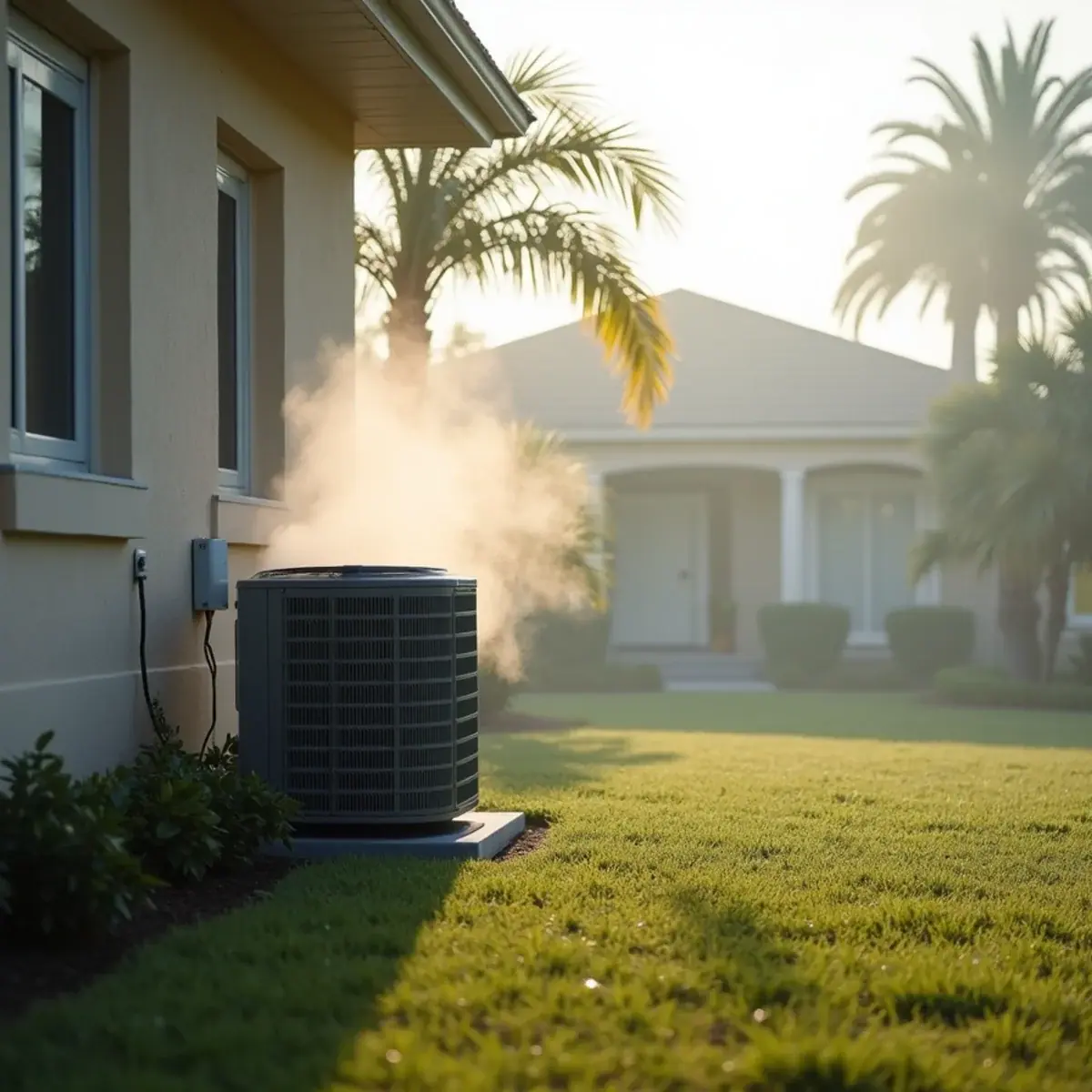
On a damp morning in the upper 30s or low 40s, the outdoor coil can run below freezing and collect frost. The defrost board senses it and switches the reversing valve to cooling mode for a few minutes. The outdoor fan stops, the coil warms, and you may see steam rising and hear a whoosh when the valve shifts back. That's normal. What's not normal: a coil encased in solid ice, a unit that never leaves defrost, or cold air blowing inside for long stretches. Those point to a failed defrost sensor or board, low refrigerant charge, or a stuck reversing valve, all jobs for our heating and heat pump repair service.
Common heat pump and heat strip problems near Venice and Nokomis
- Reversing valve stuck or its solenoid failed: the system blows cool air in heat mode.
- Thermostat wiring errors: an O/B setting wrong after a thermostat swap reverses heat and cool.
- Salt-air corrosion: homes near Dona and Roberts Bays and across from Casey Key see faster coil and electrical corrosion on outdoor units.
- Burned heat strip elements or tripped limits: one stage out means slow heating and long runtimes.
- First-cold-morning smell: a brief burning-dust odor when strips run for the first time in months is normal. A persistent or electrical smell is not, so shut the system off and call.
In Nokomis, a typical winter call looks like this: the house won't get past 66 °F, the outdoor unit is running, and the air handler is on strips because the heat pump side stopped doing its share. The cause is usually a defrost sensor, a weak capacitor, or a refrigerant leak that has quietly worsened since summer.
Should you convert when you replace?
If your straight-cool AC is due for replacement anyway, a heat pump usually costs only moderately more than a like-for-like swap, since you're buying a new outdoor unit either way. For a full-time resident or a winter snowbird, the lower heating bills and the backup provided by the existing strips make the conversion easy to justify. For a rental or a home that rarely sees the heat turned on, a straight-cool system with strips can still be a sensible choice. Our AC installation and replacement team will price both so you can compare.
When a heat pump runs on strips all winter: what we check
A January bill that looks like August is one of the most common heating complaints we hear around Venice, and the heat pump itself is often fine. Something is calling the strips when it shouldn't. On a typical call we work through it in this order:
- Watch the amps. A clamp meter on the air handler's heat circuit shows whether strips energize on a first-stage call. They shouldn't on a mild night.
- Read the thermostat setup. After a DIY smart-thermostat swap, we regularly find it set for conventional heat instead of a heat pump, or an auxiliary lockout set too high, so strips run on every cycle.
- Check the wiring at both ends. A jumper between the auxiliary and compressor terminals brings strips on with the compressor every time.
- Measure the temperature rise. Supply and return temperatures with the heat pump alone, then with strips on, show the homeowner exactly what each stage delivers.
- Look outside. A matted outdoor coil or a failing defrost sensor makes the heat pump weak, and the thermostat covers for it with strips.
The lockout setting is a real trade-off: set it too high and you waste power; set it too low and the house feels chilly on a 40 °F morning. We set it with you, not for you.
Talk through your options
Brothers Services Cooling & Heating services both setups across Venice, Nokomis and the surrounding area. Call (831) 461-3437 to book a repair or request a quote on a heat pump conversion, and Goran will explain what he finds in plain language.
FAQ
Common questions
Does a heat pump still work when it's 35 °F outside?
Yes. Modern heat pumps keep producing heat well below freezing, though output and efficiency drop as it gets colder. On the rare Venice morning in the 30s, the auxiliary heat strips may cycle on to help, and the unit may run defrost cycles. That's expected. By midday, the heat pump is usually carrying the load on its own again.
Why does my heat pump's air feel lukewarm?
Heat pumps typically deliver air in the 90s °F, which is warmer than the room but cooler than your skin, so it can feel less hot at the vent than strips or a gas furnace. They make up for it with longer, steadier cycles. If the air feels cool rather than lukewarm, have the reversing valve, defrost controls and refrigerant charge checked.
Is running emergency heat expensive?
Yes, compared with the heat pump. Emergency heat runs only the resistance strips, so every unit of heat costs a full unit of electricity, often two to three times more than the heat pump would use on a mild night. Use it only when the heat pump is broken, and schedule the repair promptly so you can switch back.
What size heat strip does a Venice home need?
It should come from a heat-loss calculation and the list of heat kits the air handler manufacturer approves for that model. Kits come in steps such as 5, 8, 10 and 15 kW, and bigger isn't better: an oversized kit needs a larger breaker and wire and makes auxiliary heat more expensive every time it runs. With a heat pump doing most of the work here, a modest backup kit is usually enough.
About the author
Written by the team at Brothers Services Cooling & Heating, an owner-operated HVAC contractor in Venice, FL. Goran and crew repair, replace and maintain air conditioners and heat pumps across Sarasota County every day — this article reflects what we see on real Gulf Coast service calls.