Core Service
Are Ductless Mini-Splits Worth It for a Florida Lanai or Garage?
A mini-split can turn an enclosed lanai or garage into usable year-round space, but it's wasted on a screened porch. Here's how to tell the difference and size it right.
Quick answer
Yes, for an enclosed lanai, Florida room or insulated garage, a ductless mini-split is usually worth it: it cools, dehumidifies and heats one space without loading your central AC. For a screened lanai open to outside air, it isn't. Correct room-level sizing, a planned condensate drain and a protected outdoor unit decide the result.
Short answer: a ductless mini-split is well worth it for an enclosed lanai, Florida room or insulated garage, and a poor investment for a screened lanai that's open to outside air. The equipment itself works beautifully in our climate. Its inverter compressor slows down to match the load, it dehumidifies well, and most models heat on chilly winter evenings. What decides success is the space around it. Here's how to judge your lanai or garage honestly before spending money.
First question: is the space actually enclosed?
Screened lanai: skip the mini-split
Screen mesh lets air pass freely. A mini-split on a screened porch would run nonstop, pull in endless humid outdoor air, sweat its coil into a constant drip, and never reach setpoint. You'd pay to cool the neighborhood. Ceiling fans, shade and a misting system are better tools for screened space.
Enclosed lanai or Florida room: a good fit
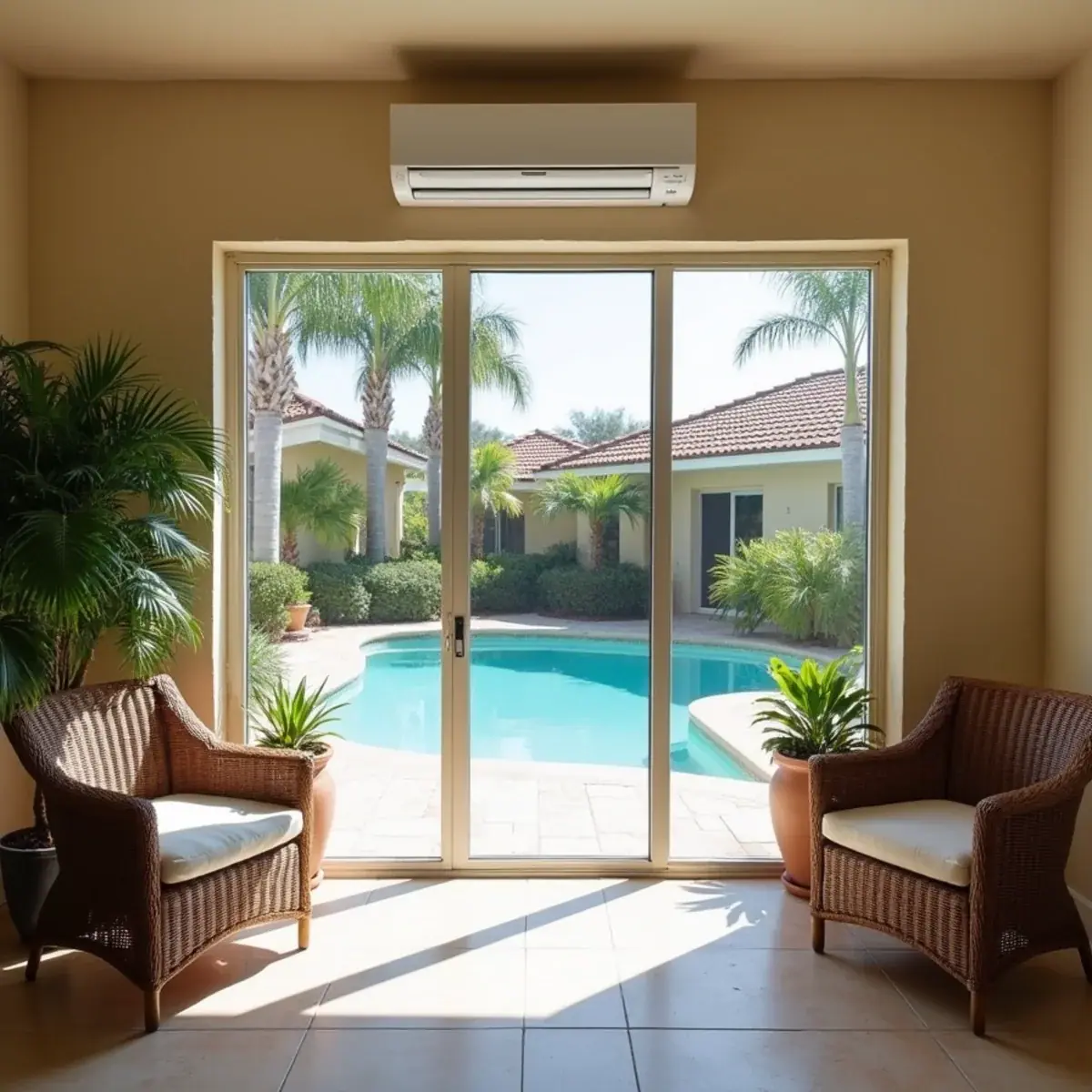
If the lanai has glass, acrylic or vinyl windows that close, a solid roof and a door to the house, a mini-split can make it comfortable year-round. Weak points to address first: single-pane glass on the west side, uninsulated aluminum roof panels, and gaps at sliding tracks. Converting a porch into conditioned space may require permits, and condo associations and HOAs often have rules about wall-mounted equipment, so check with your building department and association before you commit.
Garage: a strong fit with one big caveat
Florida garages routinely go past 100 °F in summer. The uninsulated roll-up door is the largest heat source, so an insulated door or a door insulation kit plus weatherstripping should come first. The caveat: don't tie the garage into your home's ducted system. Building codes generally prohibit drawing return air from a garage, because it can pull exhaust fumes and chemical vapors into the living space. A separate mini-split avoids that problem entirely.
Why ductless beats extending your ductwork
- No new load on the main system. Your central AC was sized for the house. Adding a glass room to it usually leaves both spaces short on cooling.
- Independent control. Cool the garage gym only when you're using it, or keep the lanai warmer while you're away.
- No attic duct losses. Refrigerant lines run through a small wall penetration, usually about 3 inches.
- Inverter efficiency. The compressor ramps down instead of cycling on and off, which also means better moisture removal.
- Heat included. Most units are heat pumps, useful on cool January evenings.
Our ductless mini-split service covers new installs, cleaning and repairs on all of these systems.
Sizing: where most lanai and garage installs go wrong
Square-foot rules of thumb fail badly in rooms that are mostly glass. A west-facing Florida room can pick up enormous solar heat after 3 p.m., while an east-facing one may be comfortable by then. Common single-zone sizes run from 9,000 to 24,000 Btu/h, and the right one comes from a room-level load calculation, not a guess.
| Space | Main load driver | What to watch |
|---|---|---|
| Enclosed lanai with west-facing glass | Afternoon solar gain | Size for the late-day peak; consider tint or shades |
| Enclosed lanai beside a pool | Moisture from the pool deck | Dehumidification, proper condensate drainage |
| Attached garage used as a workshop or gym | Uninsulated door and attic heat | Insulate the door first; clean filters often because of dust |
| Garage with freezer or water heater | Heat from appliances | Never seal off combustion air a gas water heater needs |
Oversizing is as bad as undersizing. A unit that's too big cools the room fast but leaves it clammy. Too small, and it never catches up on an August afternoon.
One outdoor unit for the lanai and the garage? Single-zone vs. multi-zone
If you want both spaces conditioned, a multi-zone system runs two or more indoor heads from one outdoor unit. It saves wall space outside and can cost less than two separate systems. The trade-offs are real, though. Both rooms share one compressor, so a failure takes out both at once. And an outdoor unit sized for two rooms can struggle to throttle down far enough when only a small garage head is calling, which means more cycling and weaker dehumidification. Two single-zone systems cost more up front but match each room exactly and keep working independently. For typical market ranges on both setups, see our 2026 Sarasota County AC cost guide.
Humidity, pools and condensate
A mini-split in a Florida lanai removes a lot of water. Most units have a dry mode that prioritizes moisture removal, which helps near pools and in humid bayfront areas like Osprey, where air off Little Sarasota Bay stays heavy most of the year. All that condensate needs a path: a gravity line with proper slope to the ground, or a condensate pump where gravity won't work. Algae clogs these lines just like central AC drains, and an overflowing head stains walls fast. For whole-home moisture problems, see our humidity and mold control service. The goal is to keep relative humidity under 60%.
Salt air and storms: protecting the outdoor unit
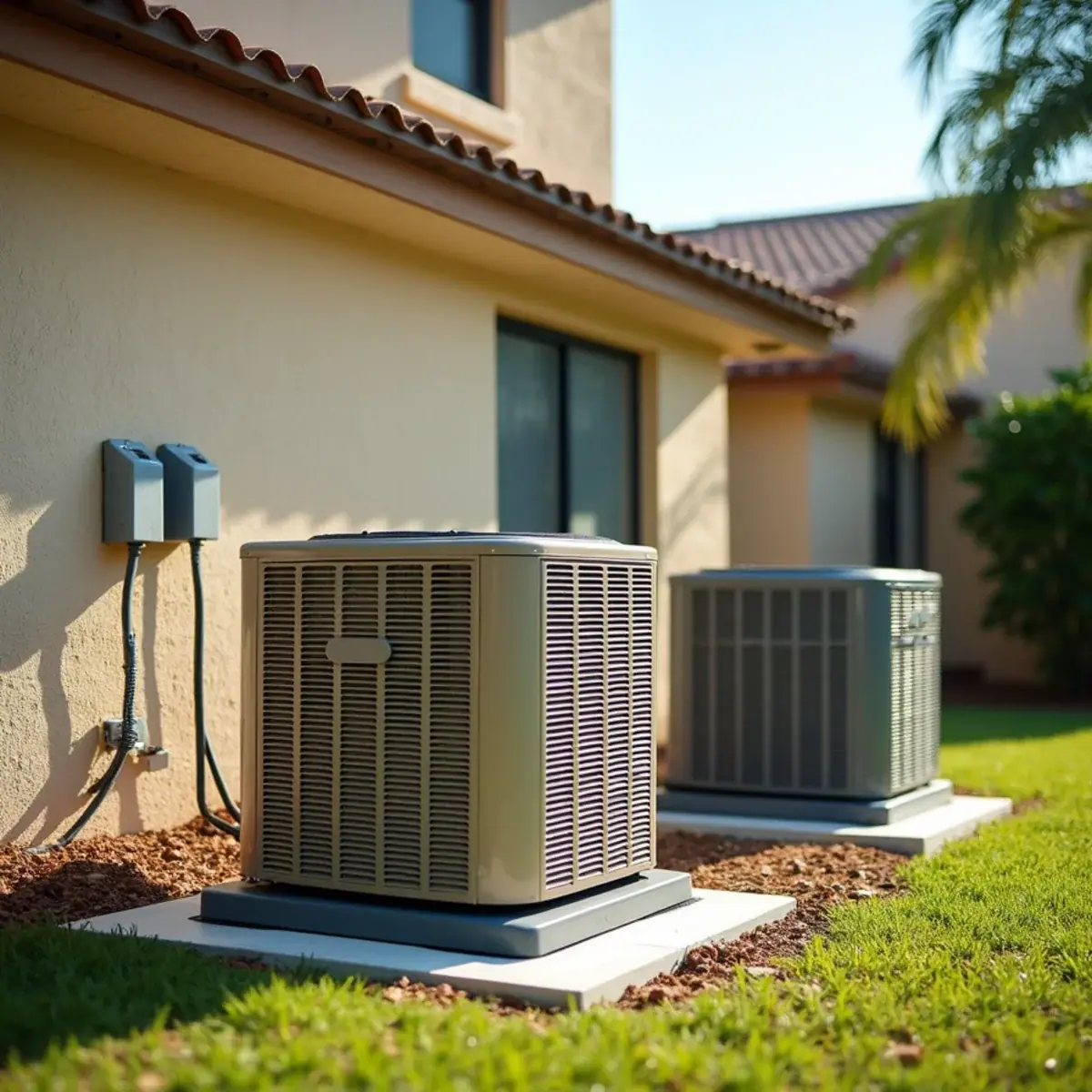
The outdoor condenser faces the same coastal abuse as any AC. Near the Gulf and the bays, ask about factory-coated coils, stainless mounting hardware and a regular freshwater rinse, and consider salt-air coil protection for waterfront homes. Ground units need wind-rated tie-downs under the Florida Building Code. Wall brackets need a solid attachment into block, not stucco alone. In Sarasota, mid-century Sarasota School homes with big glass walls often make excellent mini-split candidates, while downtown condos may restrict where an outdoor unit can go, so confirm with the association early.
Is it worth it for you? A quick gut check
- Yes: the room is fully enclosed, you'll use it most days, and the roof and glass are in decent shape.
- Probably: a garage workshop or gym you use a few times a week, with an insulated door.
- Not yet: the lanai is screened, or the envelope needs work first. Money spent on the roof panels or door gives a better return.
What wears out first on lanai and garage mini-splits
Most mini-split problems we see around Venice don't come from the compressor. They come from the parts nobody looks at after installation day, and humid lanais and dusty garages find them fast:
- The blower wheel inside the head. In a damp lanai, biofilm builds on the barrel-shaped wheel and the coil behind it. Black specks on the louvers and a sour smell are the usual signs. A filter rinse won't reach it; the head needs a proper coil and wheel cleaning.
- Outdoor line set insulation. Black foam left bare in Florida sun cracks within a few seasons, then the suction line sweats and loses capacity. A UV-rated line cover prevents it.
- Drain lines that lost their fall. A line strapped loosely to a hot exterior wall sags and holds water, and the head starts dripping.
- Flare connections. This is where small leaks usually start. On our installs we pressure-test with nitrogen, pull a vacuum down to about 500 microns and watch that it holds before opening the refrigerant.
- Garage filter screens. Sawdust and lint load them in weeks, not months, in a working shop.
Get a straight answer before you buy
Brothers Services Cooling & Heating will tell you when a mini-split isn't the right move. Call (831) 461-3437 or request a quote, and we'll look at the space, explain the options and list every part and labor cost up front.
FAQ
Common questions
Can a mini-split heat my enclosed lanai in winter?
Most ductless mini-splits are heat pumps, so yes. On a cool Venice-area evening in the 50s they heat efficiently, and many models keep working well below freezing. For a glass-walled room, closing blinds or curtains at night helps hold the heat. You'll use it far more for cooling and dehumidifying, but the heating is a welcome bonus a few weeks a year.
Do I need a permit to add a mini-split to my garage?
Most local building departments require permits for new HVAC equipment and the electrical circuit that feeds it, and a licensed contractor should pull them. Requirements differ between the City of Venice, Sarasota County, the City of Sarasota and neighboring counties. Condo associations and HOAs may add their own approval step for exterior equipment, so check both before installation day.
How loud is a ductless mini-split?
Indoor heads are quiet, especially on low speed, where many models are barely noticeable over a ceiling fan. The outdoor unit is typically quieter than a central AC condenser because the inverter compressor rarely runs at full speed. Place the outdoor unit away from bedroom windows and a neighbor's lanai, and mount it on vibration pads or a solid bracket.
Can I install a DIY mini-split kit on my lanai?
Pre-charged DIY kits exist, but the hard parts don't go away: a dedicated electrical circuit and disconnect, a sealed wall penetration, a drain line with steady fall and a mount that holds in hurricane wind. Those usually need permits, and many manufacturers limit warranty coverage on standard systems unless a licensed contractor installs them. Read the warranty terms and check with your building department before buying.
About the author
Written by the team at Brothers Services Cooling & Heating, an owner-operated HVAC contractor in Venice, FL. Goran and crew repair, replace and maintain air conditioners and heat pumps across Sarasota County every day — this article reflects what we see on real Gulf Coast service calls.